Key takeaways
- AirPods Pro 3 deliver near-clinical heart rate precision, trailing only the Apple Watch Series 11.
- Ear canal sensors bypass wrist motion artifacts, offering a highly stable environment for optical tracking.
- AirPods achieved an average error rate of just 1.67% to 2.02% against a medical-grade Polar H10.
- The shift to ear-based biometrics creates new opportunities for telehealth and enterprise logistics.
- Proper fit is paramount; the AirPods rely on a tight ear canal seal to maintain data integrity.
The Architectural Reality of AirPods Heart Rate Accuracy
The wearable technology landscape is undergoing a profound anatomical shift. For years, consumer health tracking has been inextricably linked to the wrist. However, recent independent testing has finally answered the industry’s most pressing question regarding the AirPods Pro 3: can an audio device deliver clinical-grade biometric data? The answer is a resounding yes. When examining AirPods heart rate accuracy, the data reveals a paradigm shift in how we capture human physiological metrics. In rigorous testing against the medical-grade Polar H10 chest strap, the AirPods Pro 3 demonstrated an astonishingly low error rate averaging between 1.67% and 2.02%. This places them ahead of nearly every dedicated fitness tracker on the market, trailing only the industry-leading Apple Watch Series 11.
To understand why a pair of wireless earbuds can rival dedicated fitness hardware, we must examine the fundamental physics of photoplethysmography sensors (PPG). Traditional wrist-based optical sensors operate in a hostile environment. The wrist is constantly moving, subject to extreme variations in ambient light, and surrounded by dense muscle tissue that flexes and contracts. This muscle movement frequently causes “cadence lock,” a notorious flaw in wrist wearables where the sensor mistakenly records the rhythmic impact of a runner’s footsteps as a heartbeat. The ear canal, by contrast, is a biometric sanctuary. It is dark, physically shielded from the elements, and remains relatively motionless even during high-intensity interval training (HIIT) and heavy lifting.
Apple engineered the AirPods Pro 3 with a customized PPG sensor that fires infrared light pulses into the skin at an incredible 256 times per second. By measuring the microscopic changes in blood volume with each cardiac cycle, the hardware creates a high-fidelity map of the user’s pulse. This specific hardware architecture was trained on over 50 million hours of biometric data sourced directly from the Apple Health Study, giving the machine learning algorithms a massive baseline for noise cancellation and signal isolation. To summarize this breakthrough with a high-level executive abstraction: attempting to measure a heartbeat on a swinging wrist is like trying to read a seismograph mounted to the surface of a vibrating suspension bridge. Moving the sensor to the ear canal is equivalent to anchoring that same seismograph directly into solid bedrock.
Market Impact & Deployment Economics
While the consumer narrative focuses on individual fitness tracking, the enterprise implications of this technology are monumental. For Chief Information Officers and IT deployment teams, the Total Cost of Ownership (TCO) for health-tracking hardware has historically been a significant barrier. Equipping a remote workforce, a fleet of commercial drivers, or field service technicians with a $400 smartwatch solely for biometric monitoring is difficult to justify at scale. However, the AirPods Pro 3—priced at $250—are primarily purchased as unified communications devices for hybrid work and video conferencing. The fact that they inherently possess near-clinical health monitoring capabilities essentially reduces the acquisition cost of enterprise biometrics to zero.
The broader wearable technology market is taking notice. Competitors in the audio space now face immense pressure to match Apple’s dual-purpose hardware. A recent peer-reviewed study published in the prestigious journal PLOS Digital Health in April 2026 independently validated these capabilities, indicating an average deviation of just 2.02% from chest strap metrics during rigorous treadmill tests. For medical researchers and global health logistics planners, this transforms millions of already-deployed audio headsets into potential remote patient monitoring nodes. If an employee is already wearing earbuds for a Microsoft Teams meeting, their physiological stress levels and baseline heart rate can be logged passively, completely bypassing the need to issue secondary medical devices.
There are, however, operational guardrails that enterprise and consumer users must acknowledge. The Apple ecosystem dynamically manages data fidelity. If a user is wearing both an Apple Watch Series 11 and the AirPods Pro 3 simultaneously, the operating system’s heuristic engine evaluates the signal-to-noise ratio in real-time, automatically selecting the highest-confidence data source for the Health app. Furthermore, the heart rate tracking features on the earbuds are currently gated—they are typically only enabled during active workout sessions to conserve the highly constrained battery life of the wireless buds.
The Consumer Translation: Everyday Biometrics
For the everyday athlete and general consumer, the integration of health sensors into earbuds fundamentally alters the friction of fitness tracking. In comprehensive smartwatch comparisons conducted by CNET Labs, the Apple Watch Series 11 scored an unprecedented 0.98% average error rate, maintaining its crown. However, the AirPods Pro 3 secured a definitive second place, vastly outperforming established fitness brands. This means that a casual runner who forgets their smartwatch can simply rely on their music source to capture a highly accurate biometric footprint of their run.
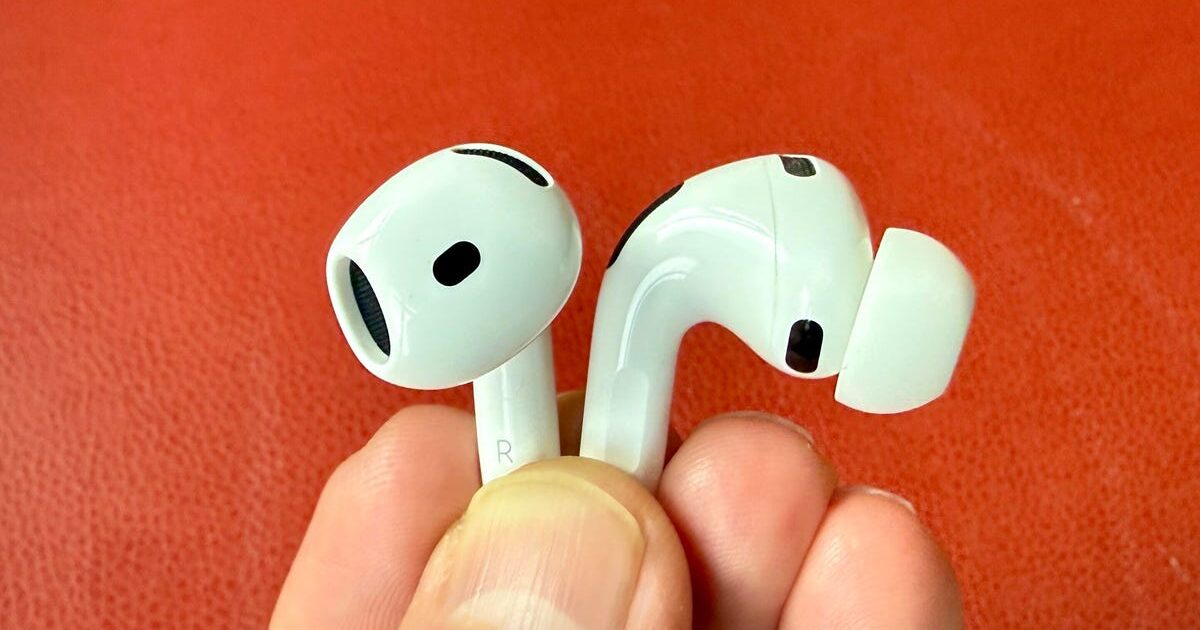
Yet, the physical interface remains the greatest variable. Unlike a watch strap that can be infinitely adjusted for tension, an earbud’s seal is dictated by the unique anatomy of the user’s ear canal. Proper fit with the correct silicone ear tips is absolutely essential to maintain consistent skin contact; without it, the optical sensor cannot function accurately. Apple has mitigated this by emphasizing a software-based “Ear Tip Fit Test” that uses acoustic feedback to verify the seal, which doubles as a verification check for the biometric sensor’s alignment.
We must also apply a rigorous red-team audit to the marketing claims. While the AirPods are exceptional at basic heart rate monitoring, they are not a holistic medical device. They entirely lack the FDA-cleared electrocardiogram (ECG) hardware found in the Apple Watch, meaning they cannot detect atrial fibrillation or irregular heart rhythms. They also lack blood oxygen (SpO2) sensors and skin temperature monitors. Furthermore, independent tests noted that the AirPods exhibit slightly wider variability in individual readings at the absolute highest tiers of exercise intensity—the moments when maximum cardiac output causes the highest physical strain. Finally, the system requires an active Bluetooth connection to a compatible iPhone to process the raw PPG data; the earbuds do not independently store vast amounts of medical data on the silicon itself.
Cross-Industry Disruption and Future Horizons
The success of the AirPods Pro 3’s biometric integration is a harbinger for three vastly different industries: Telehealth, Industrial Safety, and Professional Sports Analytics.
In Telehealth, physicians have historically struggled with patient compliance. Asking patients to wear cumbersome Holter monitors or chest straps results in high drop-off rates. Because AirPods are socially acceptable, frictionless, and worn daily for entertainment and communication, they offer the medical community a “Trojan Horse” for continuous health monitoring. The PLOS Digital Health validation serves as the foundational literature required for insurance companies to eventually subsidize these consumer devices as preventative medical equipment.
Within Industrial Safety, the implications are equally profound. Construction workers, heavy machinery operators, and factory personnel are often prohibited from wearing wrist jewelry or smartwatches due to entanglement hazards. However, hearing protection is mandatory. By integrating PPG sensors into OSHA-compliant hearing protection or ruggedized in-ear communications gear based on Apple’s blueprint, safety managers can actively monitor their workforce for heat stroke, cardiac stress, and exhaustion without violating safety protocols.
In Professional Sports, the battle for precision data is endless. While chest straps remain the gold standard, they are notoriously uncomfortable and restrictive during certain rotational movements in sports like golf, baseball, or gymnastics. Ear-based tracking provides strength and conditioning coaches with a non-invasive telemetry stream that remains astonishingly accurate even when the athlete’s arms and torso are engaged in violent, explosive motion.
Frequently Asked Questions
How accurate is the heart rate monitor on the AirPods Pro 3?
The AirPods Pro 3 are highly accurate, demonstrating an average error rate of between 1.67% and 2.02% when compared to a medical-grade Polar H10 chest strap. While they slightly trail the Apple Watch Series 11 (which has a 0.98% error rate), they outperform almost all other smartwatches on the market.
Can AirPods Pro 3 detect irregular heart rhythms or take an ECG?
No. Unlike the Apple Watch, the AirPods Pro 3 do not support ECG functionality, skin temperature sensing, or blood oxygen monitoring. Their primary health function is strictly tracking heart rate during active workout sessions.
Why is the ear a good place to measure heart rate?
The ear canal provides a highly stable environment that minimizes ambient light interference and motion artifacts. It also avoids “cadence lock,” a common issue where wrist-based trackers mistakenly record repetitive arm movements—like running steps—as heartbeats.
Do I need an Apple Watch if I have AirPods Pro 3 for fitness tracking?
You do not need an Apple Watch to track your heart rate, but you do need a paired iPhone to process and record the data. If you wear both devices simultaneously, Apple’s system automatically selects the highest-confidence data source for your workout.
TechNode HQ Verdict: Pros, Cons & Usability
- Pro (Engineering): Bypasses wrist-based cadence lock by utilizing a highly stable ear-canal PPG sensor firing at 256Hz.
- Pro (Consumer): Eliminates the need to wear a dedicated smartwatch for casual runs and gym workouts, reducing daily technological friction.
- Con: Completely dependent on a perfect physical seal with the silicone ear tips; poor fit immediately degrades signal integrity.
- Con: Lacks comprehensive diagnostic hardware—no ECG, blood oxygen, or skin temperature sensors are included.
Enterprise Usability: For CIOs and safety managers, this represents a zero-cost acquisition for remote health monitoring if your workforce is already deploying AirPods for unified communications. However, the data must be routed carefully, as the health tracking natively requires an iPhone to process the metrics.
Everyday Usability: For the general public, the AirPods Pro 3 are a triumph of convenience. If you are a casual athlete or a dedicated runner tired of tan lines and heavy watches, you can confidently rely on these earbuds to provide metrics that are statistically indistinguishable from a $400 smartwatch. They are a definitive buy.