Key takeaways
- The Swiss parliament voted 100-98 to lift the 2017 ban on new nuclear power plants.
- Lawmakers amended the Nuclear Energy Act instead of altering the Swiss Constitution.
- The Green Party plans to challenge the reversal with an optional national referendum.
- Nuclear baseload power is increasingly viewed as vital for continuous enterprise IT operations.
- Long-term waste disposal for new nuclear plants remains an unresolved infrastructure challenge.
Swiss nuclear ban reversal: The Catalyst
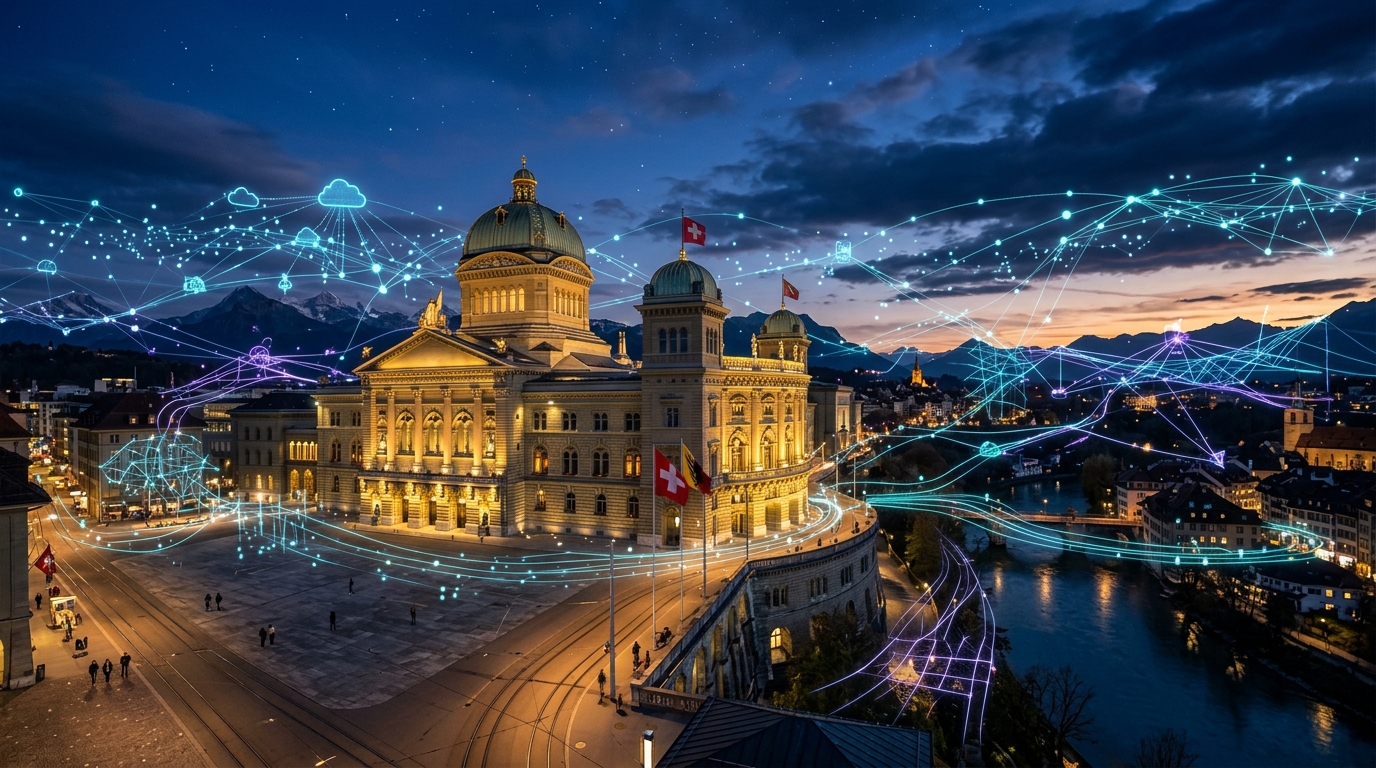
The recent Swiss nuclear ban reversal marks a historic and highly controversial pivot in European energy strategy. On June 18, 2026, the National Council narrowly approved a government counter-proposal with a 100 to 98 vote, officially lifting the prohibition on constructing new nuclear power plants. This monumental legislative shift effectively amends the existing Nuclear Energy Act rather than requiring a direct amendment to the Swiss Constitution.
Switzerland had effectively prohibited the construction of new nuclear facilities following a 2017 referendum, a direct consequence of the Energy Strategy 2050 adopted in the wake of the 2011 Fukushima accident. However, the modern demand for relentless, uninterrupted electrical power—driven by the exponential growth of hyperscale computing, AI data centers, and rigorous Enterprise IT requirements—has forced a rapid reassessment of national energy security.
The original “Stop the Blackout” initiative, heavily supported by right-leaning lawmakers and the business sector, advocated for a “technology-neutral” approach that allows for all climate-friendly forms of electricity production. The government’s counter-proposal absorbs this philosophy, asserting that nuclear energy is critical to meeting aggressive climate targets while simultaneously addressing potential supply gaps.
The Architectural Reality

From an engineering perspective, the grid is a delicate balancing act. While renewable sources like wind and solar are expanding, their intermittent nature poses a severe risk to infrastructures that cannot tolerate micro-outages or fluctuating voltages. Modern silicon manufacturing and heavy computational workloads demand an uncompromising baseline of power.
Nuclear energy acts as the primary fiber-optic backbone of a national power network, while renewables function more like local Wi-Fi. You absolutely need the massive, continuous throughput of the backbone to handle heavy, persistent traffic. By keeping the nuclear option open, Switzerland is ensuring that its grid architecture remains robust enough to support next-generation industrial demands.
Existing nuclear power plants in Switzerland are already permitted to operate as long as they meet strict safety standards. The new legislative framework enables the theoretical deployment of advanced reactor designs, potentially including Small Modular Reactors (SMRs). These modern architectures offer passive safety systems and highly efficient thermal outputs, directly translating to a more stable power frequency across the European grid.
Market Impact & Deployment
The financial and deployment realities of this reversal are immense. For executives managing Networking & Cloud operations, predictability in utility pricing is a core component of Total Cost of Ownership (TCO). A reliable nuclear baseload effectively hedges against the volatility of imported natural gas and international energy market shocks, allowing for highly accurate long-term financial modeling.
However, the path to deployment is not clear. Because Switzerland operates under a system of direct democracy, the parliamentary decision to lift the ban is far from final. It is fully expected to be challenged through an optional national referendum. Left-leaning factions, specifically the Green Party, have officially announced their intention to launch a referendum to fiercely oppose the parliamentary decision.
The Green Party argues that the mere prospect of lifting the nuclear ban could freeze or slow down critical investments in renewable energy alternatives. Furthermore, they correctly point out a glaring logistical bottleneck: the long-term waste disposal solutions for nuclear energy remain scientifically and politically unresolved in Switzerland. This presents a massive hurdle for any real-world construction timelines.
The Consumer Translation
For the average consumer, this highly technical and political battle boils down to two simple metrics: the reliability of the light switch and the cost of the monthly utility bill. The “Stop the Blackout” initiative was explicitly branded to address the public’s fear of energy rationing during harsh winters. Recent polls and surveys have indicated a tangible shift in public sentiment, with a majority of Swiss citizens now supporting the construction of new plants to guarantee a secure electricity supply at all times.
While the actual construction of a new nuclear facility could take decades, the legislative maneuver signals to the global market that Switzerland is prioritizing infrastructural resilience. It represents a pragmatic, if controversial, acknowledgment that the modern digital economy cannot function on hope and intermittent weather patterns alone.
Frequently Asked Questions
Q1: Why did Switzerland enact the Swiss nuclear ban reversal?
A1: Parliament lifted the ban to guarantee long-term energy security, meet zero-emission climate targets, and prevent catastrophic power supply gaps.
Q2: Will new nuclear power plants be built immediately in Switzerland?
A2: No. Due to Switzerland’s system of direct democracy, the parliamentary decision will face a national referendum initiated by the Green Party.
Q3: How does lifting the nuclear ban affect enterprise IT?
A3: Massive data centers and hyperscale computing require reliable, 24/7 baseload power, which nuclear energy provides more consistently than intermittent renewable sources.
TechNode HQ Verdict: Pros, Cons & Usability
- Pro (Engineering): Delivers an ultra-stable, high-capacity electrical baseload necessary for uninterrupted hyperscale data center operations.
- Pro (Consumer): Drastically reduces the systemic risk of winter blackouts and stabilizes long-term national energy pricing.
- Con: The massive capital expenditure required for new reactors diverts essential funding away from rapidly deployable renewable energy grids.
- Con: Long-term nuclear waste disposal remains an unsolved infrastructural and political crisis within Switzerland’s borders.
Enterprise Usability: CTOs and cloud architects should view this as a positive long-term indicator for Swiss data center stability, though they must maintain distributed failover strategies as actual reactor construction is decades away.
Everyday Usability: For the general public, this represents a major policy shift guaranteeing future grid stability, though it will inevitably trigger a highly polarized national referendum before any ground is broken.