Key takeaways
- Vibrio vulnificus infections function like biological zero-day exploits, requiring rapid response.
- Florida’s coastal waters desperately need continuous, real-time microbial surveillance networks.
- Emerging edge computing infrastructure can detect and prevent catastrophic public health emergencies.
- Necrotizing fasciitis destroys tissue rapidly, contradicting sensationalized “flesh-eating” myths.
- A minor scratch at a local park led to intensive surgeries and aggressive antibiotic protocols.
The intersection of public health and enterprise-grade technology has never been more critical. As flesh-eating bacteria outbreaks continue to threaten vulnerable coastal populations, public health infrastructure is being fundamentally stress-tested. What is often perceived as an unpredictable biological anomaly is, in reality, a glaring gap in civic data telemetry. Without real-time environmental logging, local municipalities are effectively operating their natural recreational networks blind, waiting for a catastrophic failure before initiating incident response protocols.
Consider the harrowing case of 17-year-old Joziah Thompson. Following a routine visit to a local park in Niceville, Florida, Joziah contracted a severe infection that rapidly escalated into a life-threatening medical crisis. While swimming with his siblings at Lion’s Park, the teenager sustained a minor scratch on his leg. In the realm of cybersecurity, this is akin to an unsecured endpoint device—a trivial vulnerability that, if exploited by the right payload, can bypass perimeter defenses and compromise the entire core network. In this case, the payload was a deadly pathogen, and the consequences were devastating.
Within just two days of the visit, the area around the minor scratch became violently inflamed. The wound evolved into an intensely painful, hot-to-the-touch localized crisis, signaling that the biological infection had established a foothold and was accelerating its destructive processes. The lack of proactive, sensor-driven warnings meant that the family was entirely unaware of the invisible threat lurking in the local waters, highlighting a desperate need for modernization in how we monitor our public aquatic environments.
The Architectural Reality: Biological Zero-Days

To understand the severity of this systemic failure, one must understand the mechanics of the pathogen itself. The infection was caused by Vibrio vulnificus, a type of bacteria commonly and somewhat inaccurately described as ‘flesh-eating’. Related to the bacteria responsible for cholera, Vibrio vulnificus naturally occurs in warm, brackish, or salt waters—the exact environmental parameters found along much of the Florida coastline. When this bacterium breaches the human system through an open wound, the biological execution is swift and merciless.
The resulting condition is known as necrotizing fasciitis, a rapidly destructive infection that targets the skin and underlying fascial tissue. It is crucial to clarify the mechanics here: the bacteria do not literally eat flesh. Instead, they operate more like a destructive ransomware payload, releasing toxins that systematically destroy the tissue they infect, cutting off blood supply and triggering widespread cellular death. This rapid necrosis demands immediate, aggressive intervention to halt its lateral movement across the body.
For Joziah, the escalation required emergency medical intervention. He was rushed to the hospital to receive treatment, where surgical teams had to perform multiple, highly invasive surgeries to physically remove the infected and necrotic tissue—a drastic measure roughly equivalent to severing corrupted hardware from a critical server rack to save the broader data center. After an agonizing week, Joziah was discharged from the hospital on June 10, 2026. However, his discharge does not mark the end of the incident response; he is continuing an aggressive course of antibiotics, and his recovery process includes intensive, ongoing wound care and meticulous monitoring to prevent secondary infections.
Market Impact & Deployment: The Cost of Blind Spots

The total cost of ownership (TCO) for civic infrastructure is traditionally measured in maintenance, utility integration, and physical security. But when municipalities fail to integrate modern data telemetry into their environmental management, the hidden costs are outsourced directly to citizens and the healthcare system. The financial and emotional toll of a single Vibrio vulnificus infection dwarfs the potential investment required for comprehensive environmental monitoring.
In the wake of Joziah’s hospitalization, a GoFundMe page was established to help cover the family’s soaring medical expenses. This crowd-funded desperation underscores a profound failure in public infrastructure. The burden of treating life-threatening infections—involving advanced surgical suites, extended ICU stays, and complex pharmacological regimens—creates an immense strain on both individual households and the broader medical economy. From a macroscopic enterprise view, this is an inefficient, reactionary model.
Joziah’s mother, Tirzah Thompson, has become a vocal advocate for systemic change, pushing for better public awareness and deeply practical technological solutions. She is actively pushing for proactive surveillance of bacterial levels in local waters. Her demand is simple but architecturally profound: she hopes to see a system that notifies the public about potential contamination risks before they enter the water. Implementing a robust edge computing infrastructure to manage this telemetry is no longer a futuristic luxury; it is a fundamental requirement for coastal risk management. The hardware and software stacks necessary to build this early warning system already exist in the enterprise IT sector; they simply need to be adapted for civic deployment.
The Consumer Translation: Real-World Consequences
For the everyday consumer—parents, tourists, and local residents—the translation of this technical deficit is stark and terrifying. A day at a local park, an activity universally marketed as a safe, family-friendly endeavor, carries an unquantified risk. Joziah Thompson is 5-foot-11 and weighs 225 pounds; he is a physically robust young adult. His mother agonizingly pointed out the terrifying alternative: what if this exact same biological payload had infected a 5-year-old child whose immune system lacked the strength to endure such an aggressive assault?
The psychological impact of flesh-eating bacteria outbreaks creates a chilling effect on local tourism, real estate valuations, and community well-being. People rely on the assumption that designated recreational areas are actively monitored and safe. When that trust is broken by a severe, unexpected hospitalization, the ensuing panic damages the local economy. Consumers today expect real-time data for traffic, weather, and air quality. The fact that waterborne microbial threats are still treated as invisible, unpredictable acts of nature rather than trackable data points is an anachronism that modern citizens are increasingly unwilling to accept.
Engineering Civic Surveillance: Deploying the Edge
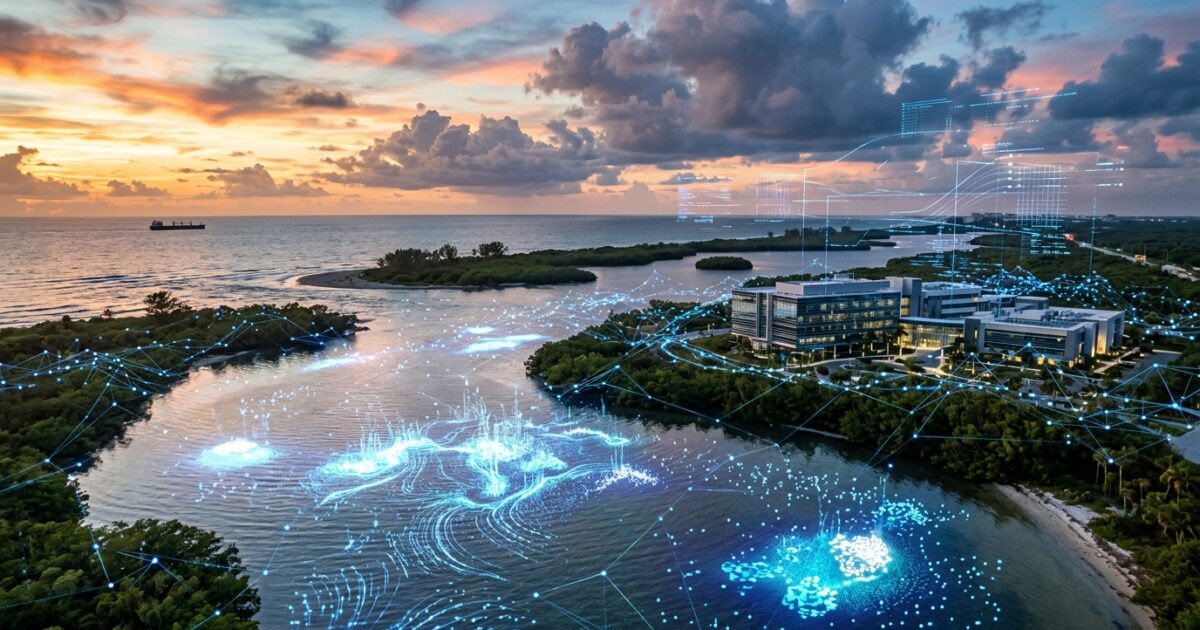
How do we engineer a resilient solution? The answer lies in decentralizing data collection and pushing analytics to the periphery. A modern coastal safety grid requires extensive IoT sensor deployment. Ruggedized, continuously active sensors placed in estuaries, public beaches, and local parks can monitor the exact environmental precursors that allow Vibrio vulnificus to thrive: water temperature, salinity, and specific microbial marker density.
However, collecting the data is only the first step. The sheer volume of telemetry generated by thousands of aquatic sensors necessitates sophisticated data orchestration. By leveraging edge computing nodes, raw sensor data can be processed locally, reducing latency and bandwidth costs. When microbial concentrations cross a pre-defined algorithmic threshold, the edge node can instantly trigger an automated alert pipeline. This pipeline would update municipal dashboards, trigger localized physical warning beacons, and push notifications directly to residents’ smartphones via public safety APIs.
This is the essence of global health logistics translated to the local level. By treating public waters as a dynamic, measurable environment rather than a static backdrop, cities can transition from reactive trauma care to proactive threat mitigation. The technology to prevent another tragedy like Joziah Thompson’s is fully mature; it merely awaits the civic will to deploy it.
Frequently Asked Questions
Q1: What is Vibrio vulnificus and how does it operate?
A1: Vibrio vulnificus is a bacterium that naturally occurs in warm, brackish, or salt waters. When it enters an open wound, it can cause necrotizing fasciitis, rapidly destroying infected tissue.
Q2: How did Joziah Thompson contract the infection?
A2: The 17-year-old sustained a minor scratch while swimming with siblings at Lion’s Park in Niceville, Florida. Within two days, the wound became inflamed, hot to the touch, and extremely painful, requiring immediate hospitalization.
Q3: How can technology mitigate flesh-eating bacteria outbreaks?
A3: Deploying IoT sensors and edge computing infrastructure in coastal waters allows for proactive surveillance. This continuous monitoring can trigger immediate alerts when dangerous microbial thresholds are breached, preventing human exposure.
Q4: Are flesh-eating bacteria literally eating flesh?
A4: No. Despite the sensationalized term, the bacteria do not literally eat flesh; rather, they release toxins that trigger a severe immune response and subsequent tissue death.
TechNode HQ Verdict: Pros, Cons & Usability
- Pro (Engineering): Edge-based microbial surveillance drastically reduces public health latency, automating threat detection via distributed IoT arrays.
- Pro (Consumer): Real-time API alerts empower families to make informed, data-driven decisions about recreational water safety before exposure.
- Con: High initial capital expenditure (CapEx) required to ruggedize, deploy, and calibrate continuous microbial sensors in harsh saltwater environments.
- Con: Navigating fragmented municipal IT architectures to build a unified, public-facing data orchestration pipeline presents significant deployment friction.
Enterprise Usability: For public sector CTOs and civic infrastructure managers, deploying localized edge surveillance is rapidly becoming a liability necessity. The integration of continuous water quality telemetry into existing smart-city dashboards is a high-priority architectural upgrade to prevent massive healthcare and PR fallout.
Everyday Usability: Until municipal sensor networks are fully operational and accessible via consumer APIs, the public must remain hyper-vigilant. Citizens should advocate for localized testing and treat minor abrasions with extreme caution when interacting with unmonitored warm, brackish waters.