
Key takeaways
- CVE-2026-5027 exposes 7,000+ Langflow servers to remote code execution via path traversal flaws.
- The vulnerability lies in the POST /api/v2/files endpoint’s lack of filename sanitization.
- Default unauthenticated auto-login configurations allow exploitation without user credentials.
- Attackers are actively dropping malicious files, rewriting system cron jobs and SSH keys.
- AI frameworks LangGraph and LangChain suffer from similar boundary management vulnerabilities.
The Architectural Reality of the Langflow Server Vulnerability
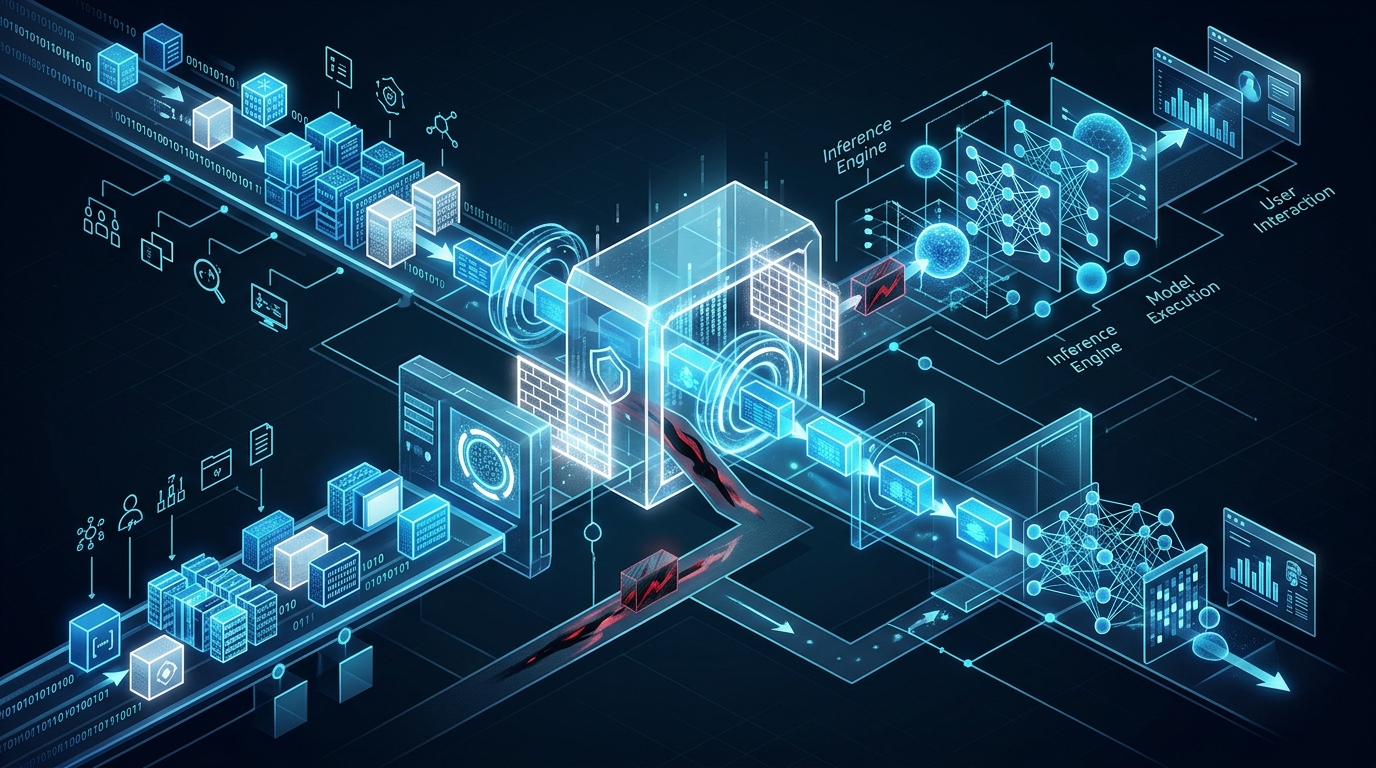
The global enterprise landscape is currently facing a catastrophic infrastructure crisis as a critical Langflow server vulnerability allows remote attackers to seize control of vital orchestration pipelines. Your artificial intelligence agent is ultimately only as secure as the underlying framework it runs upon. Currently, the cybersecurity community is tracking an unprecedented exposure event where over 7,000 Langflow instances are exposed to the open internet, turning ostensibly minor software bugs into full-blown server takeovers. Tracked formally as CVE-2026-5027, this high-severity path traversal vulnerability carries a Common Vulnerability Scoring System (CVSS) score of 8.8, reflecting its critical nature and the ease with which it can be weaponized against modern AI orchestration frameworks.
To understand the sheer magnitude of this architectural failure, one must look at the mechanics of the exploit itself. The vulnerability specifically exists within the POST /api/v2/files endpoint, which manages file uploads for the Langflow environment. Within this endpoint, the upload_user_file() function fails to properly sanitize the filename parameter provided in multipart form data. In a secure application, input validation would strip out dangerous characters and enforce strict boundary management. However, Langflow’s implementation accepts raw input, allowing attackers to utilize directory traversal sequences—such as ../—within the filename. This fundamental breakdown in input validation enables malicious actors to traverse the host’s directory structure and write arbitrary files anywhere on the operating system.
Mechanics of Remote Code Execution in AI Infrastructure
The severity of CVE-2026-5027 is exponentially compounded by a pervasive configuration issue within the Langflow ecosystem: the platform is frequently configured with a default, unauthenticated auto-login feature. This configuration means that an attacker does not even require legitimate user credentials to access the vulnerable endpoint. By sending a carefully crafted HTTP POST request to the file upload API, a remote, unauthenticated attacker can silently deposit malicious payloads onto the server.
Once the attacker has the ability to write arbitrary files, the path to full Remote Code Execution (RCE) and total system compromise is trivial. Threat actors typically target critical operating system files that control access and task scheduling. By overwriting or appending to the SSH authorized_keys file, an attacker can grant themselves persistent, secure shell access to the host machine. Alternatively, attackers can inject malicious scripts into system cron jobs, ensuring their code is executed with high privileges at regular intervals. Security researchers at VulnCheck have explicitly confirmed that attackers are already using this exact methodology in the wild to drop files on exposed instances, transforming experimental AI nodes into entrenched beachheads for deeper network infiltration.
A Systemic Crisis: LangGraph and LangChain
While the immediate panic centers on Langflow, the architectural reality extends far beyond a single application. Similar boundary management vulnerabilities and input sanitization flaws are actively being observed in other foundational AI frameworks, most notably LangGraph and LangChain. These frameworks act as the cognitive glue connecting Large Language Models (LLMs) to enterprise databases and external APIs. When the orchestration layer contains fundamental path traversal vulnerabilities, the entire AI chain becomes a liability.
The core issue stems from the rapid, prototype-driven development culture of the generative AI boom. Developers prioritized functionality, complex chain building, and API integration over fundamental security hygiene. The assumption was often that these frameworks would run in highly restricted, local environments. However, as organizations rush to production, these tools are being deployed on publicly accessible endpoints without reverse proxies, Web Application Firewalls (WAFs), or proper container isolation. The result is a fragile ecosystem where Langflow-base versions below 0.8.3, and Langflow versions up to and including 1.8.4, remain critically vulnerable. A patch is available in Langflow version 1.9.0, but the deployment lag leaves thousands of systems in peril.
Market Impact & Deployment

The commercial and operational ramifications of the Langflow server vulnerability are staggering. When we analyze the telemetry and deployment footprint, the scale of the exposure paints a grim picture for enterprise IT security. According to recent Censys data, there are roughly 7,000 publicly exposed Langflow instances currently connected to the internet. Furthermore, the geospatial data indicates a high concentration of these vulnerable, exposed servers are located in North America, representing a massive attack surface directly targeting the heart of the global technology and financial sectors.
This is not a theoretical threat or a purely academic exercise. History has already demonstrated the consequences of vulnerable AI infrastructure. Previous Langflow vulnerabilities, such as CVE-2025-3248 and CVE-2026-33017, were rapidly exploited in the wild shortly after disclosure. Threat actors leveraged those past exploits to enslave powerful AI servers and deliver aggressive botnets, such as the notorious Flodrix malware. The current situation with CVE-2026-5027 is a repeating cycle, but with potentially higher stakes given the increasing integration of AI into mission-critical workflows.
Translating Technical Debt into Business Risk
For Chief Information Security Officers (CISOs) and enterprise decision-makers, the Total Cost of Ownership (TCO) calculation for AI deployments must now radically change. The business value of saving developer hours through rapid AI orchestration is entirely negated if the underlying enterprise infrastructure requires constant, emergency remediation to prevent catastrophic data breaches. When a server is compromised via an RCE exploit, the remediation costs are astronomical. Organizations must halt production, conduct expensive forensic investigations, rebuild servers from untainted images, and navigate the complex legal fallout of potential intellectual property or customer data theft.
To put this into an executive abstraction: Imagine deploying a state-of-the-art, billion-dollar secure bank vault to house your most valuable assets, but leaving the loading dock door permanently propped open for delivery drivers without checking their ID. The vault’s advanced security is rendered meaningless by a fundamental failure in basic access control. This is exactly what happens when brilliant LLMs are orchestrated by frameworks lacking basic input sanitization and authentication.
Cloud Deployment and Network Hygiene
The deployment reality is that many of these Langflow instances are spun up in agile, cloud-native environments without oversight from traditional IT security teams. Shadow AI—where individual departments deploy their own orchestration tools to accelerate projects—means that traditional vulnerability scanners may not even be aware these servers exist. The reliance on default configurations, such as unauthenticated auto-login, is a symptom of cloud deployment configurations optimized for speed rather than defense. Security teams must immediately audit their external attack surface, mandate the upgrade to Langflow 1.9.0, and enforce strict Zero Trust network policies that explicitly block public access to backend AI orchestration APIs.
The Consumer Translation
While path traversal vulnerabilities and multipart form data sanitization sound like esoteric problems relegated to backend server administrators, the downstream impact on the everyday consumer is profound and highly damaging. As businesses integrate AI into customer-facing applications—ranging from automated financial advisors to healthcare triage chatbots—the data processed by these Langflow and LangChain pipelines becomes incredibly sensitive. A breach at the orchestration layer means that consumer data is intercepted, manipulated, or stolen before it even reaches the core language model or the secure database.
Erosion of Trust and Privacy
When an attacker achieves Remote Code Execution on an AI server, they do not just gain the ability to mine cryptocurrency or launch DDoS attacks; they gain absolute control over the logic of the AI application itself. For a consumer interacting with a compromised AI agent, this means their inputs—which could include personally identifiable information (PII), financial records, or private communications—are directly exposed to threat actors. The attacker can silently monitor the prompt and response streams, extracting valuable data without ever triggering traditional endpoint security alerts.
Furthermore, a compromised Langflow server can be weaponized against the consumer. Hackers can alter the system prompts or the execution chains to force the AI to return malicious outputs. Imagine a legitimate customer support bot that has been hijacked to serve phishing links or socially engineer the user into revealing their passwords. The consumer trusts the brand and the AI interface, making them highly susceptible to these manipulated interactions. This fundamentally erodes public trust in AI technologies and creates massive liability for the corporations deploying them.
The Ripple Effect Across Industries
The cascading effects of this vulnerability are staggering when viewed through a cross-industry lens. In the healthcare sector, organizations utilizing AI to process patient summaries and streamline administrative workflows are now facing severe compliance breaches under regulations like HIPAA. A compromised Langflow server processing medical records represents a catastrophic violation of patient privacy. Similarly, in the financial services industry, algorithmic trading firms and wealth management platforms relying on LangChain for rapid market analysis risk exposing proprietary trading strategies and client financial data. The technical debt incurred by rushing insecure AI frameworks to market is being paid by the consumers whose data is unwittingly caught in the crossfire.
Frequently Asked Questions
Q1: What is the Langflow server vulnerability?
A1: The Langflow server vulnerability, tracked as CVE-2026-5027, is a critical path traversal flaw in the file upload mechanism that allows attackers to write arbitrary files and achieve Remote Code Execution. It affects Langflow versions up to 1.8.4 and Langflow-base versions below 0.8.3.
Q2: How are attackers exploiting this flaw?
A2: Attackers exploit the POST /api/v2/files endpoint by injecting directory traversal sequences (../) into the filename parameter of multipart form data. Because Langflow often runs with default unauthenticated auto-login, hackers can bypass authentication entirely to overwrite critical system files like SSH authorized_keys.
Q3: How many servers are currently affected by this exploit?
A3: According to Censys data, roughly 7,000 publicly exposed Langflow instances have been identified. Security researchers at VulnCheck have confirmed that attackers are actively exploiting these exposed servers to drop malicious files, with a heavy concentration of targets in North America.
Q4: Are other AI frameworks vulnerable?
A4: Yes, similar boundary management vulnerabilities have been identified in other popular AI orchestration frameworks, including LangGraph and LangChain, highlighting a systemic lack of robust input validation in the rapidly evolving AI infrastructure ecosystem.
Q5: How can enterprises secure their Langflow deployments?
A5: Enterprise IT teams must immediately upgrade to Langflow version 1.9.0, which patches CVE-2026-5027. Additionally, administrators should disable unauthenticated auto-login, implement strict network access controls, and monitor system cron jobs and SSH keys for unauthorized modifications.
TechNode HQ Verdict: Pros, Cons & Usability
- Pro (Engineering): Rapid, visual pipeline construction accelerates LLM deployment times significantly when properly secured within isolated, air-gapped container environments.
- Pro (Consumer): Powers next-generation, responsive AI applications that can drastically improve customer service and personalized digital interactions.
- Con: Shocking lack of basic input sanitization (path traversal) and reliance on unauthenticated auto-login by default creates a catastrophic, zero-click Remote Code Execution attack vector.
- Con: Widespread Shadow AI deployments mean many vulnerable servers are unmonitored by centralized IT, making rapid patching to version 1.9.0 logistically difficult.
Enterprise Usability: CTOs and security architects must mandate an immediate, organization-wide audit for any instances of Langflow, LangChain, or LangGraph. These tools should never be exposed directly to the public internet. Deployments must be placed behind strict Web Application Firewalls (WAFs), authentication must be enforced, and all instances must be urgently updated to Langflow 1.9.0.
Everyday Usability: Consumers should maintain a healthy skepticism when interacting with automated AI agents. While the public cannot patch backend servers, they should limit the sharing of highly sensitive personal or financial information with AI chatbots, as the orchestration layers governing these bots are currently experiencing severe, actively exploited security crises.