Key takeaways
- OLED landscape with an 82.4% user preference for superior picture quality.
- Samsung’s S90F delivers exceptional value through unmatched fast motion performance and lightweight chassis design.
- Roku maintains a 59.1% interface preference, proving UI speed dictates long-term ecosystem retention.
- TCL’s QM8L Mini-LED architecture rivals premium OLED models in rigorous expert lab testing.
- Crowd-sourced reliability surveys perfectly align with thousand-hour expert hardware benchmarks and performance metrics.
The Architectural Reality of the Best OLED TVs
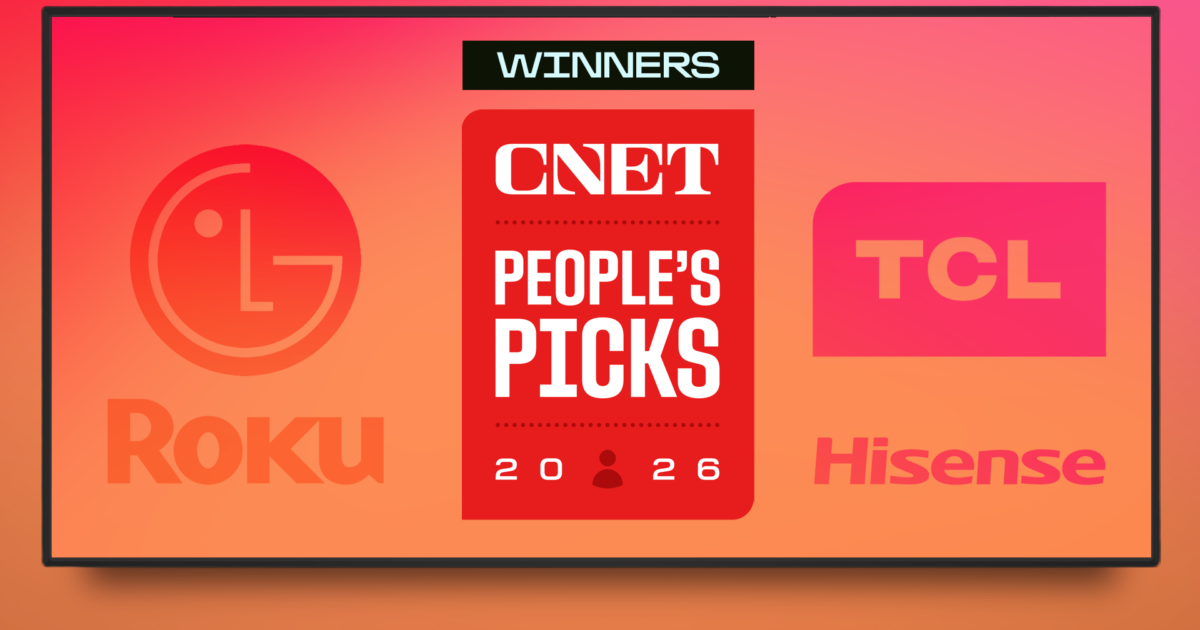
Finding the best OLED TVs requires an unflinching examination of the underlying photonic engineering and semiconductor technology that drives modern display panels. In 2026, the global marketplace for high-end displays is defined by a ruthless duopoly between LG and Samsung. As visual fidelity reaches unprecedented peaks, the architectural reality of these televisions has shifted from mere pixel density to localized light emission, quantum dot integration, and computational processing speeds. LG and Samsung have definitively emerged as the winning brands in CNET’s July 2026 People’s Picks awards, heavily signaling that consumer sentiment flawlessly mirrors rigorous hardware and silicon benchmarks.
To understand the technological supremacy of these displays, one must look at the mechanics of self-emissive pixels. Traditional LCD and LED televisions rely on a centralized or edge-lit backlight array that illuminates a liquid crystal layer. This architecture fundamentally limits contrast because light inevitably bleeds through the liquid crystal shutter, turning pure blacks into muddy grays. OLED (Organic Light Emitting Diode) technology bypasses this logistical nightmare entirely. Every single pixel on an OLED panel generates its own light and color, allowing individual pixels to shut off completely when displaying black. This self-emissive architecture is why LG took the top spot for picture quality in recent surveys, with an astonishing 61.7% of LG TV owners reporting an “Excellent” experience. Readers specifically praised LG for its performance in dark rooms, noting inky blacks with absolutely zero light bleed.
LG’s dominance is not accidental; it is the result of over a decade of continuous manufacturing refinement. Consequently, LG sweeps the OLED and QD-OLED category with a massive 82.4% preference among CNET readers. In contrast, Samsung trailed in the specific OLED preference category, scoring 45%. This discrepancy is primarily rooted in production history; Samsung aggressively re-entered the OLED space in 2022 after producing a single model in 2013, whereas LG has spent ten years fine-tuning its fabrication pipelines, yielding superior panel uniformity and burn-in mitigation strategies.
However, Samsung is rapidly iterating. As of July 2026, CNET identified the Samsung S90F as a standout model for their Best Value TV pick. This specific model is highly regarded for its lightweight design and ease of installation, but its engineering truly shines in its fast motion performance—a critical metric for high-end gamers pushing variable refresh rates. Furthermore, the Samsung S95H OLED was specifically highlighted for its radically increased brightness capabilities and seamless integration with the Samsung Art Store, bridging the gap between high-performance computing displays and aesthetic interior design.
Market Impact and Deployment
The business implications of these technological leaps are vast. The People’s Picks program is a community-driven initiative where readers vote on the products they use daily, meaning the winners are determined entirely by respondent ratings rather than expert selection or targeted advertising. When an enterprise or a consumer decides to invest capital into a hardware refresh, they are fundamentally calculating the Total Cost of Ownership (TCO) against long-term reliability. User surveys provide a broad, crowd-sourced view of how products hold up over time, capturing the long-term reliability and satisfaction that sterile lab environments might miss.
Interestingly, CNET’s TV experts noted that the People’s Picks reader survey results largely validated their own rigorous lab testing. Reviewers like Ty Pendlebury and David Katzmaier spend thousands of hours in dedicated lab spaces testing products for color accuracy, contrast, brightness, and gaming capabilities. The fact that organic consumer feedback perfectly aligns with clinical data indicates a maturing market where rigorous device comparisons are translating directly into verifiable user experiences.
Beyond the premium OLED tier, the market data reveals fierce battles in alternative architectures like Mini-LED and standard LCDs. TCL has claimed victory in the Mini-LED and QLED space, securing a 57.5% preference rate over Hisense’s 52.1%. The TCL QM8L currently holds CNET’s top Best TV of 2026 designation based on expert testing, proving that localized dimming zones—when engineered with thousands of microscopic LEDs—can rival the contrast of OLED technology at a fraction of the manufacturing cost. Meanwhile, Roku dominates the budget segment and the smart OS ecosystem. Over 72% of Roku owners purchased a unit under $500, yet 59.1% of users voted Roku as the absolute best smart TV ecosystem, citing its fast, clean, and highly navigable interface.
Enterprise and Cross-Industry Disruptions
Think of display panel technology like global supply chain networks. An OLED panel is akin to point-to-point direct routing—every pixel independently manages its own localized light and color delivery, eliminating the “logistical overlap” and light bleed inherent to traditional centralized backlighting hubs. This point-to-point accuracy isn’t just visually pleasing; it is mission-critical for industries outside the living room.
In the healthcare sector, the pristine contrast ratios and absolute blacks of OLED displays are increasingly leveraged for telemedicine and radiological imaging, where a muddy gray versus a pure black could be the difference between spotting an anomaly and missing a diagnosis. The architectural leap in pixel precision fundamentally reduces false positives in visual diagnostics. Similarly, the aviation and automotive industries are heavily adopting Mini-LED panels for digital cockpits and dashboard interfaces. Because Mini-LED provides massive brightness peaks that combat direct sunlight glare, it ensures critical telemetry data remains legible under severe environmental stress.
Even the hospitality industry is heavily impacted. By standardizing upon platforms like Roku, hotels are rapidly deploying consumer technology ecosystems to power their in-room digital signage and entertainment grids. The rapid, uncluttered user interface minimizes IT support tickets while maximizing guest satisfaction, proving that software efficiency scales just as powerfully as hardware contrast.
The Consumer Translation
For the average consumer, this intense hardware arms race translates to a vastly superior living room experience. Reader satisfaction in the survey is heavily influenced by how TV brands perform in everyday living room conditions—handling the aggressive glare of afternoon sunlight or the deep shadows of midnight cinema viewing. LG was specifically highlighted by readers for its flawless ability to handle fast-moving content and gaming without motion blur, an achievement driven by instantaneous pixel response times.
However, visual fidelity is only half of the equation. Audio architecture continues to be a bottleneck for ultra-thin televisions. Because OLED and Mini-LED chassis are incredibly slim, there is virtually no physical volume available to house large acoustic drivers. The laws of physics dictate that deep bass requires moving large amounts of air, which is impossible in a millimeter-thick panel. This is why experts universally recommend pairing these premium displays with dedicated soundbars or surround systems. Interestingly, Hisense managed to win the sound quality category with 45.7% of its users rating the internal audio as “great,” vastly outperforming Sony, Samsung, and Vizio in raw acoustic satisfaction.
Ultimately, consumers are no longer just buying a screen; they are buying an interactive computing node for their home. The interface speed, the motion processing engine, and the underlying panel technology all converge to define the product’s lifespan. When expert and reader opinions align on these TV choices, it provides incredibly high confidence that a multi-thousand-dollar investment will yield years of reliable, high-performance entertainment.
Frequently Asked Questions
Why do LG models typically dominate OLED rankings?
LG has over a decade of dedicated OLED manufacturing experience. This yields an 82.4% user preference for perfect dark scenes.
What makes the Samsung S90F highly recommended?
The S90F is celebrated as a Best Value TV due to its lightweight design and rapid motion processing for gamers.
Can Mini-LED displays compete with OLED?
Yes. The TCL QM8L utilizes advanced Mini-LED zones to match OLED contrast, maintaining a 57.5% market preference in the category.
Why is Roku so dominant in budget categories?
Roku focuses heavily on interface optimization. Over 59.1% of users prefer its fast, uncluttered ecosystem over proprietary smart TV operating systems.
Do user surveys match expert reviews?
Yes. CNET experts confirmed that real-world user satisfaction data closely validates thousands of hours of controlled laboratory evaluations.
TechNode HQ Verdict: Pros, Cons & Usability
- Pro (Engineering): Self-emissive OLED pixels provide mathematically perfect contrast ratios by independently shutting off light sources.
- Pro (Consumer): Next-generation processing eliminates motion blur for sports and variable refresh rate gaming.
- Con: Ultra-thin structural chassis designs severely limit internal acoustic volume, necessitating external sound hardware.
- Con: Legacy OLED panels still carry a slight premium in upfront capital expenditure compared to mature standard LED formats.
Enterprise Usability: CTOs and creative directors should deploy premium OLED panels in grading suites and executive boardrooms where precise color accuracy and deep contrast are essential for professional presentations and media production.
Everyday Usability: The general public should absolutely invest in OLED or premium Mini-LED models today. The technology has matured past the experimental phase, offering incredible longevity, software stability, and unmatched living room viewing experiences.


