Key takeaways
- The AI plagiarism epidemic allows unauthorized sites to outrank original authors.
- Agencies use AI models like GPT-4 and DALL-E 2 to launder copyrighted works.
- Authors and publishers face skyrocketing costs defending their intellectual property.
- Major lawsuits against Anthropic, Meta, and OpenAI are redefining copyright law.
- AI search engines hallucinate authorship, validating counterfeit platforms.
The AI Plagiarism Epidemic Unveiled
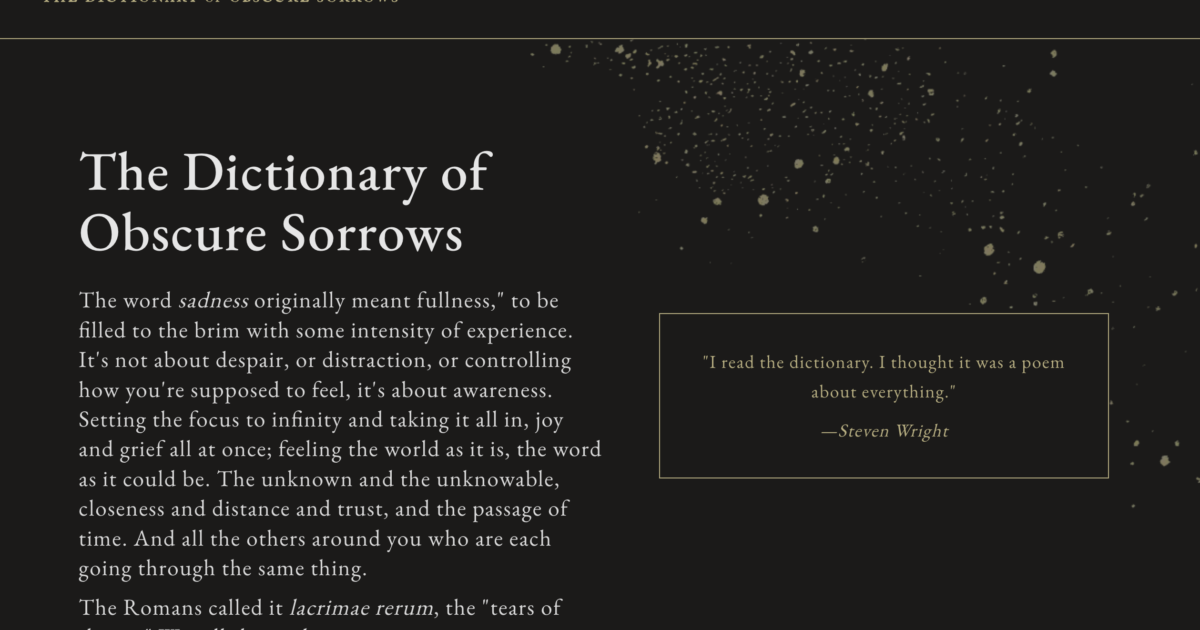
The publishing world is currently battling a severe crisis: the AI Plagiarism Epidemic. Recently, the acclaimed book The Dictionary of Obscure Sorrows by John Koenig was brazenly copied by a marketing agency named Qontour. The agency cloned the entire text of the New York Times bestseller onto a new domain, stripped the original artwork, and replaced it with DALL-E 2 generated images. Even more egregiously, they incorporated OpenAI’s GPT-4 to allow users to generate “new” sorrows, thereby laundering the original intellectual property through generative AI models to create a dynamic, monetized counterfeit site. The agency embedded their own Amazon affiliate links, redirecting the author’s rightful revenue into their own pockets.
This is not an isolated incident. Thousands of authors, including Richard Osman and Kazuo Ishiguro, have actively protested against AI companies ingesting their copyrighted books. From scammers generating garbage books under the names of established authors like Jane Friedman to the Commonwealth Short Story Prize controversy where a winning story was alleged to be AI-generated, the integrity of written media is under systemic assault.
The Architectural Reality of Content Cloning
From an engineering perspective, the barrier to entry for mass copyright infringement has dropped to zero. In the past, plagiarism required manual transcription or simple copy-pasting, which was easily detectable via basic web scraping and hashing algorithms. Today, malicious actors leverage cloud-based infrastructure and advanced LLM APIs to ingest, paraphrase, and restructure entire corpora of text in seconds.
Furthermore, conversational AI search engines are exacerbating the problem. Because these counterfeit sites are often built on modern web stacks (like Webflow) and aggressively optimized for SEO, AI systems like ChatGPT and Gemini frequently hallucinate authorship, linking to the bootleg site as the “official” source. The architecture of modern search relies on structured data and extractable passages; when a counterfeit site provides cleaner machine-readable data than the original author’s site, the AI search engine inadvertently crowns the plagiarist as the authoritative source.
Market Impact & Deployment of Counterfeits
For Enterprise IT leaders and publishing executives, the Total Cost of Ownership (TCO) for content security has exploded. The traditional DMCA takedown process is fundamentally broken in the face of programmatic generation. Simon & Schuster filed DMCA takedowns against the Qontour site to no avail. Legitimate authors are now forced to spend immense time and financial resources defending their reputations, purchasing services like “Instant IP” to timestamp their manuscripts as evidence of human authorship.
The market response has been severe. Publishers are integrating strict clauses into contracts, dictating that any use of AI in a manuscript will result in an immediate rejection or permanent ban. Meanwhile, massive class-action lawsuits are underway against Anthropic, Meta, and OpenAI, challenging the foundational legality of training LLMs on copyrighted, and often pirated, datasets. The outcome of these lawsuits will dictate the economic viability of AI-driven content generation platforms worldwide.
The Consumer Translation: Trust in the AI Era
Think of this technological shift like a counterfeit storefront setting up shop directly outside a legitimate, artisanal factory, but the town’s GPS navigation system has been hacked to route all incoming tourists exclusively to the counterfeit. To the average consumer, the fake storefront looks more polished, modern, and accessible than the original.
For the worldwide public, this results in a complete collapse of trust. Readers are increasingly unable to distinguish between human-authored insights and algorithmic slop. Authors in nuanced genres, such as spirituality and occult literature, are seeing their life’s work drowned out by a surge of low-quality, AI-rephrased clones. To combat this, consumer-facing labels like “Human Authored” are beginning to appear on books, a desperate attempt to signal authenticity in an increasingly synthetic marketplace. When journalists like Alex Preston are dismissed from the New York Times for passing off AI-generated text as professional criticism, the crisis of trust extends from fiction to the very bedrock of objective reporting.
Frequently Asked Questions
Q1: What is the AI plagiarism epidemic?
A1: The AI plagiarism epidemic refers to the widespread use of generative AI tools to steal, remix, and monetize copyrighted works without consent. This includes cloning entire books and using AI to generate derivative content.
Q2: How did an agency steal The Dictionary of Obscure Sorrows?
A2: A marketing agency named Qontour cloned the entire book onto a new domain, replaced original art with DALL-E 2 images, and used GPT-4 to generate new entries. They monetized the site using Amazon affiliate links and used it as a portfolio piece.
Q3: Are publishers taking action against AI plagiarism?
A3: Yes, publishers are increasingly vigilant. Some have canceled books suspected of using generative AI, and many now include clauses that reject or ban manuscripts using AI.
Q4: What legal actions are being taken against AI companies?
A4: Class-action lawsuits have been filed against major AI companies, including Anthropic, Meta, and OpenAI, for using hundreds of thousands of copyrighted books to train their models without authorization.
TechNode HQ Verdict: Pros, Cons & Usability
- Pro (Engineering): Generative AI enables rapid content structuring and deployment at scale, heavily reducing frontend development time.
- Pro (Consumer): Highly polished, interactive web experiences are more accessible to everyday users.
- Con: The proliferation of AI-generated content creates a massive verification bottleneck, forcing enterprises to invest heavily in IP protection.
- Con: Conversational AI search engines actively validate and amplify unauthorized, counterfeit websites.
Enterprise Usability: CTOs and security teams must urgently deploy digital watermarking and cryptographic timestamping solutions for all proprietary data to establish a defensible chain of custody against automated scraping.
Everyday Usability: Consumers must adopt extreme skepticism when navigating informational sites, specifically seeking out cryptographic or verifiable “Human Authored” indicators before purchasing or citing digital media.


