
Key takeaways
- Google released the official Google Cloud API Client Libraries for Swift (google-cloud-swift), engineered for Swift 6.2+ on Linux servers and macOS workstations.
- The SDK utilizes Swift Concurrency and Apple’s SwiftNIO to deliver non-blocking event loops, HTTP/2 multiplexing, and gRPC transport without operating system thread congestion.
- Built for containerized microservices on Cloud Run, GKE, and Compute Engine, with native support for server frameworks like Hummingbird and Vapor.
- Google advises against embedding the SDK into client iOS, iPadOS, or visionOS apps, recommending the Firebase SDK for Apple Platforms to protect service credentials.
Google has launched the official Google Cloud Swift SDK (google-cloud-swift), bringing native Google Cloud API client libraries to server-side Swift developers. Designed from the ground up for Swift 6.2 and later, the new open-source SDK allows engineering teams to build high-throughput microservices, automation tooling, and cloud-native backends on Linux and macOS. By combining Swift 6 compile-time data race safety with Apple’s non-blocking SwiftNIO event-driven networking framework and gRPC transport, the SDK provides direct access to over one hundred Google Cloud services without the operational overhead of garbage-collected runtimes or per-connection operating system threads.
Historically viewed primarily as a client-side programming language for Apple platforms, Swift has evolved through the work of the Server-Side Swift workgroup into an efficient systems environment. The release of official Google Cloud client libraries marks an important milestone for platform engineers seeking deterministic resource consumption alongside modern language ergonomics.
Official Google Cloud client libraries arrive for Swift
Backend systems frequently force infrastructure teams to navigate trade-offs between developer productivity and runtime efficiency. Managed runtimes that rely on tracing garbage collectors can introduce unpredictable tail-latency spikes during periods of high traffic. Conversely, traditional systems languages often require substantial boilerplate and complex manual memory tracking that can reduce delivery velocity.
Server-side Swift addresses both challenges by combining Automatic Reference Counting (ARC) with modern language features. ARC provides deterministic memory management without stop-the-world pauses, while Swift 6 enforces compile-time concurrency checking. Across asynchronous cloud tasks, the Swift compiler verifies that shared data structures conform to the Sendable protocol, catching potential data races during compilation before code reaches containerized production environments.
The SDK supports multiplatform workflows across workstations and production environments. Platform engineers can develop locally on macOS using Xcode and deploy compiled Linux executables directly into container platforms such as Cloud Run, Google Kubernetes Engine (GKE), and Compute Engine virtual machines. This multiplatform consistency allows full-stack engineering organizations to share common data models and business logic across client applications and cloud backends.
Non-blocking concurrency and modular transport architecture
At the network layer, google-cloud-swift operates entirely on event-driven, non-blocking sockets. Each API call communicates over HTTP/2 multiplexing and gRPC channels managed by SwiftNIO event loops. This architecture allows a small pool of worker threads to service thousands of concurrent requests across multicore Linux instances without incurring operating system thread exhaustion.
The SDK repository organizes core infrastructure capabilities into decoupled, modular packages:
| Package Name | Architectural Responsibility | Operational Scope |
|---|---|---|
swift-google-cloud-auth |
Credential discovery and authentication | Discovers Application Default Credentials, signs service account JWTs, processes API keys, and exchanges tokens for Workload Identity Federation. |
swift-google-cloud-wkt |
Protocol Buffer well-known types | Provides idiomatic Swift representations for common Protocol Buffer types, including nanosecond-precision timestamps mapped directly to Swift Date. |
swift-google-cloud-gax |
Google API Extensions (GAX) | Manages resilient client transport, automated retry loops, exponential backoff policies, and non-blocking asynchronous pagination state machines. |
| Autogenerated Service Clients | Typed API interfaces | Exposes idiomatic Swift async/await client methods, thread-safe configuration closures, and asynchronous sequences for over 100 cloud services. |
To avoid verbose object mutation and ensure thread safety, the client interfaces employ structured builder closures. Configuration patterns use fluent closures that isolate mutations within local initialization scopes:
import Foundation
import GoogleCloudLanguageV2

func analyzeTextSentiment(text: String) async throws {
    let client = try LanguageServiceClient()

    // Structured builder closures isolate configuration safely
    let document = Document().with {
        $0.type = .plainText
        $0.source = .content(text)
    }

    let response = try await client.analyzeSentiment(
        request: AnalyzeSentimentRequest().with { $0.document = document }
    )

    if let sentiment = response.documentSentiment {
        print("Document sentiment score: \(sentiment.score)")
    }
}
For operations that return long lists of resources, the generated SDK exposes AsyncSequence streams rather than requiring manual page-token loops. For example, when querying Google Cloud Secret Manager, a service can consume items asynchronously while the client library fetches subsequent pages in the background over non-blocking channels:
import Foundation
import GoogleCloudSecretManagerV1

func listProjectSecrets(projectId: String) async throws {
    let client = try SecretManagerServiceClient()
    let request = ListSecretsRequest().with {
        $0.parent = "projects/\(projectId)"
    }

    // AsyncSequence handles pagination over non-blocking sockets
    for try await secret in try client.listSecretsByItem(request: request) {
        print("Secret resource: \(secret.name)")
    }
}
Deployment environments and credential security boundaries
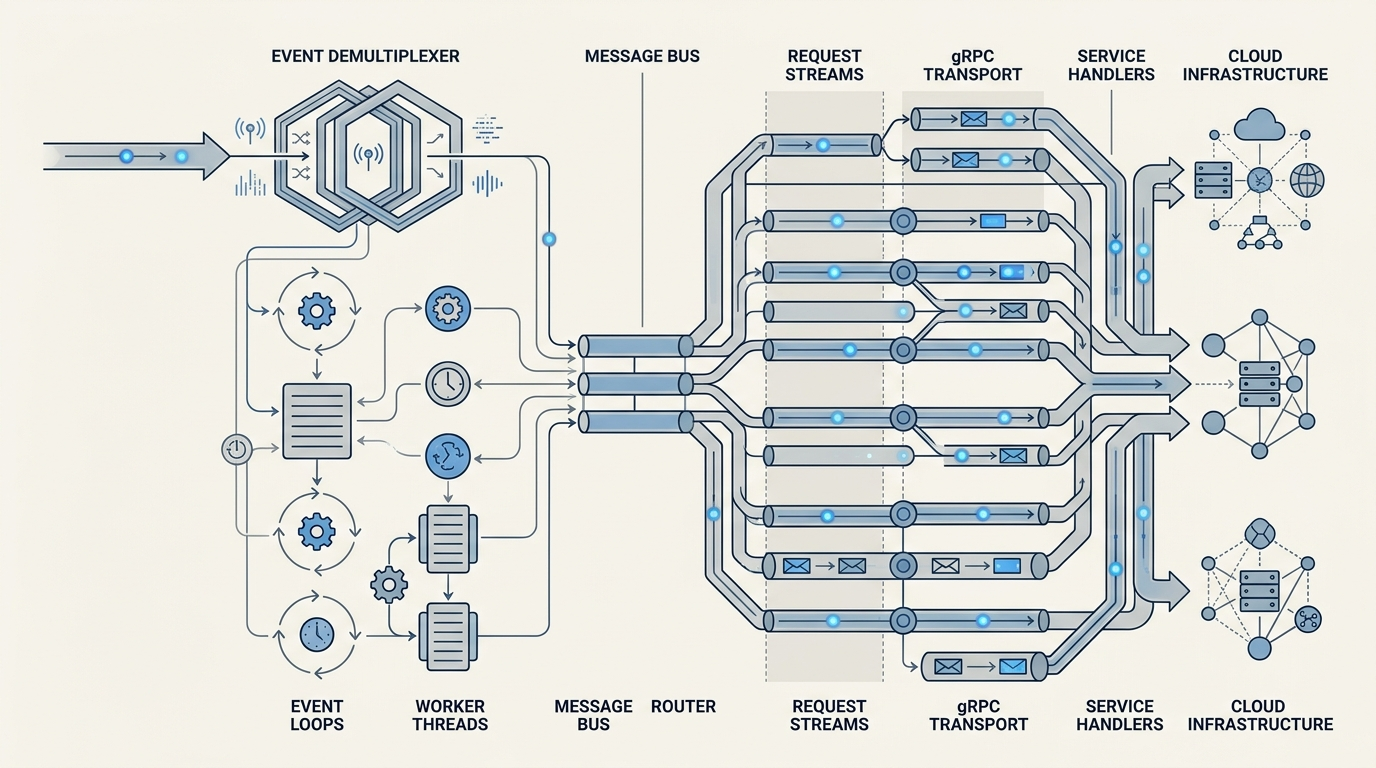
The Server Side Cloud Swift SDK integrates directly with lightweight server frameworks such as Hummingbird and Vapor. These frameworks enable developers to build microservices that interact with Cloud Storage, BigQuery, and backend databases, including instances utilizing Google Cloud database search services.
In addition to web services, the SDK serves platform engineering and DevOps automation workflows. SRE and infrastructure teams can write standalone command-line utilities and key-rotation scripts that execute locally or within CI/CD pipelines. These tools resolve credentials automatically via Application Default Credentials (ADC) or exchange OpenID Connect tokens via Workload Identity Federation, eliminating hardcoded secrets.
Google outlines a strict architectural boundary regarding where google-cloud-swift should run. The SDK is engineered exclusively for trusted server, container, and administrative environments. Organizations building client applications for iOS, iPadOS, macOS, or visionOS must not bundle google-cloud-swift directly into application binaries. Embedding Google Cloud service account keys or administrative credentials inside client bundles exposes infrastructure to extraction and unauthorized access. Client applications should interact with Google Cloud resources either through the official Firebase SDK for Apple Platforms or by routing requests through authenticated Cloud Run backend APIs.
Linux environments require Swift 6.2 or later. Systems teams can install the toolchain using the swiftly toolchain installer or official binary tarballs for Ubuntu, Debian, Fedora, and Amazon Linux, configuring Git bare-repository settings where needed for Swift Package Manager builds.
What happens next
The launch of google-cloud-swift provides server-side Swift developers with first-party support across more than one hundred Google Cloud APIs, ranging from Cloud Storage and IAM to multimodal inference via the Gemini API on Gemini Enterprise Agent Platform. Google generates and maintains these client libraries on a regular release schedule to reflect API schema updates while preserving stable public interfaces.
Google has published the project under the Apache 2.0 license at the googleapis/google-cloud-swift repository on GitHub, where engineering teams can review source code, submit feature requests, and contribute veneers. Organizations evaluating server-side Swift for cloud infrastructure can participate in architectural discussions through the Google Developer Program as additional service veneers and integrations roll out.