
Key takeaways
- The Anthropic Pentagon dispute stemmed from fundamental clashes over AI safety, ethics, and domestic surveillance capabilities.
- Anthropic explicitly barred its AI from fully autonomous weapons, a redline the Pentagon called “just not workable.”
- A former Uber executive, Emil Michael, aggressively pushed DoD demands despite holding stock in rival xAI.
- The Pentagon weaponized a “supply chain risk” designation, typically used for foreign adversaries, to blacklist Anthropic.
- The military plans to deploy AI to engineer autonomous swarms to compete with rival global superpowers.
The Architectural Reality of the Anthropic Pentagon Dispute
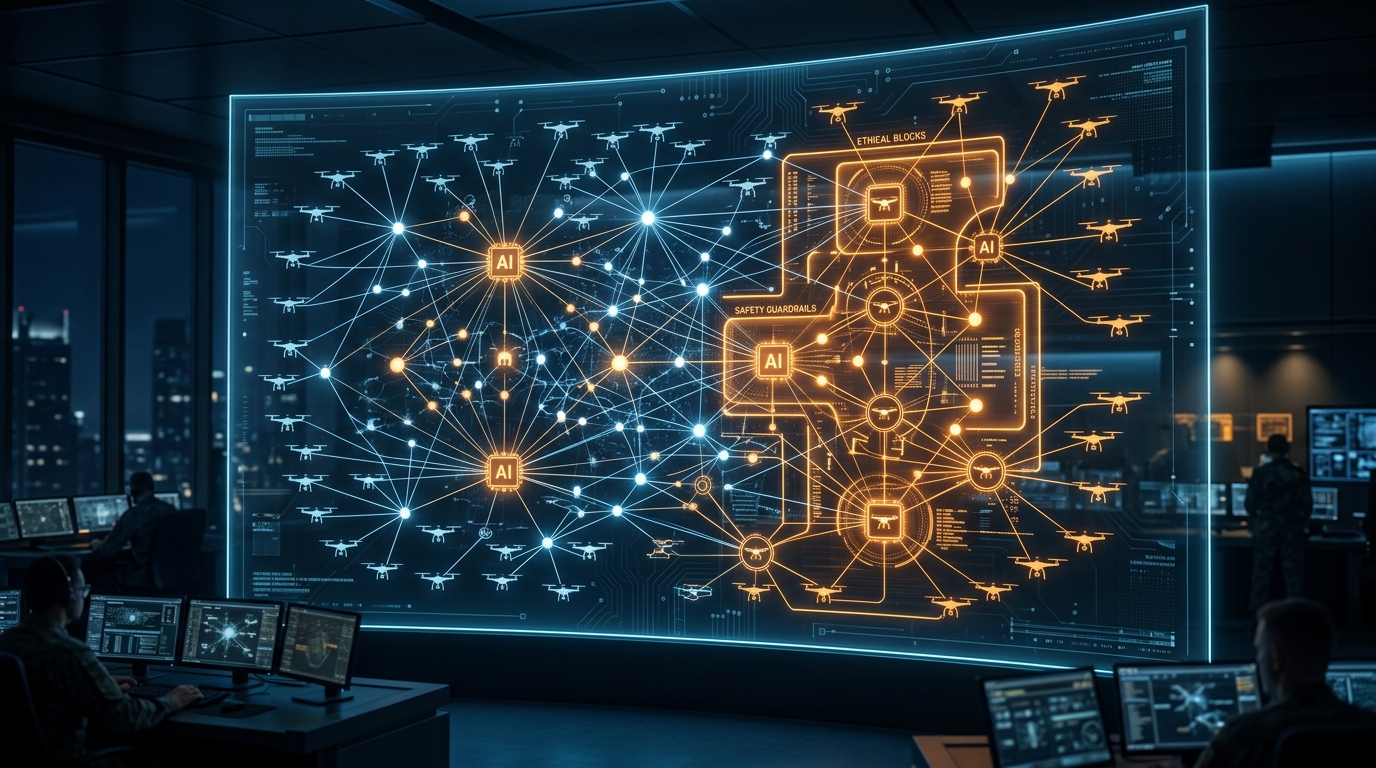
The recent unsealing of federal court documents in the Northern District of California has exposed the internal architecture of the Anthropic Pentagon dispute, laying bare the deep ideological and technical chasms between Silicon Valley AI safety mandates and the Department of Defense’s modernization agenda. At its core, the highly sensitive correspondence between the two entities reveals that negotiations broke down over a fundamental clash regarding AI safety and ethics. Anthropic, led by CEO Dario Amodei, sought to strictly restrict the use of its cutting-edge technology for fully autonomous weapons. Furthermore, Amodei explicitly wanted to bar Anthropic’s AI from being used for the mass domestic surveillance of Americans. From a technical standpoint, integrating large language models (LLMs) into command-and-control frameworks requires a robust API layer that can ingest multi-modal intelligence feeds, process vast quantities of data, and execute real-time strategic decisions without hallucination or hesitation.
Anthropic’s safety protocols are structurally embedded into their proprietary models using mechanisms like Constitutional AI, which algorithmically resists generating outputs that violate predefined ethical bounds. However, the Department of Defense, represented by Under Secretary of Defense for Research and Engineering Emil Michael—a former Uber executive—fundamentally rejected these hardcoded safeguards. The Pentagon aggressively argued that it required completely unfiltered access to Anthropic’s AI models for “all lawful uses.” Furthermore, the Department of Defense maintained that there should be absolutely no distinction between defensive and offensive weapons in a national security context. This stance rendered Anthropic’s attempts to geofence or functionally restrict its API for purely defensive operations practically impossible, setting the stage for an unprecedented standoff between commercial tech governance and sovereign military authority.
Why was the Department of Defense so insistent on bypassing Anthropic’s embedded safety guardrails? The answer lies in the military’s overarching strategic roadmap for the next decade of warfare. The military is actively seeking to utilize AI to develop autonomous swarms to compete with global rivals in theaters of operation where electronic warfare and signal jamming make remote human piloting obsolete. From a pure engineering perspective, an autonomous swarm requires low-latency, highly intelligent compute clusters capable of making synchronized targeting and evasion decisions without human-in-the-loop intervention. If the underlying artificial intelligence frameworks dynamically refuse to execute commands deemed offensive or harmful by their training weights, the swarm’s operational efficacy is lethally compromised. Michael characterized Anthropic’s requested algorithmic safeguards as “just not workable” for military operations, later describing the restrictions in explicit terms as an “irrational obstacle” to the military’s development. The Pentagon contended that explicit guardrails embedded within the software itself were entirely unnecessary because military uses are already governed by existing law and military policy. This represents a fundamental misalignment in structural risk management: Anthropic relies on deterministic software safety bounds to prevent misuse at scale, whereas the Pentagon relies on human legal interpretation and chain-of-command accountability to regulate behavior post-deployment.
Market Impact & Deployment: Enterprise TCO
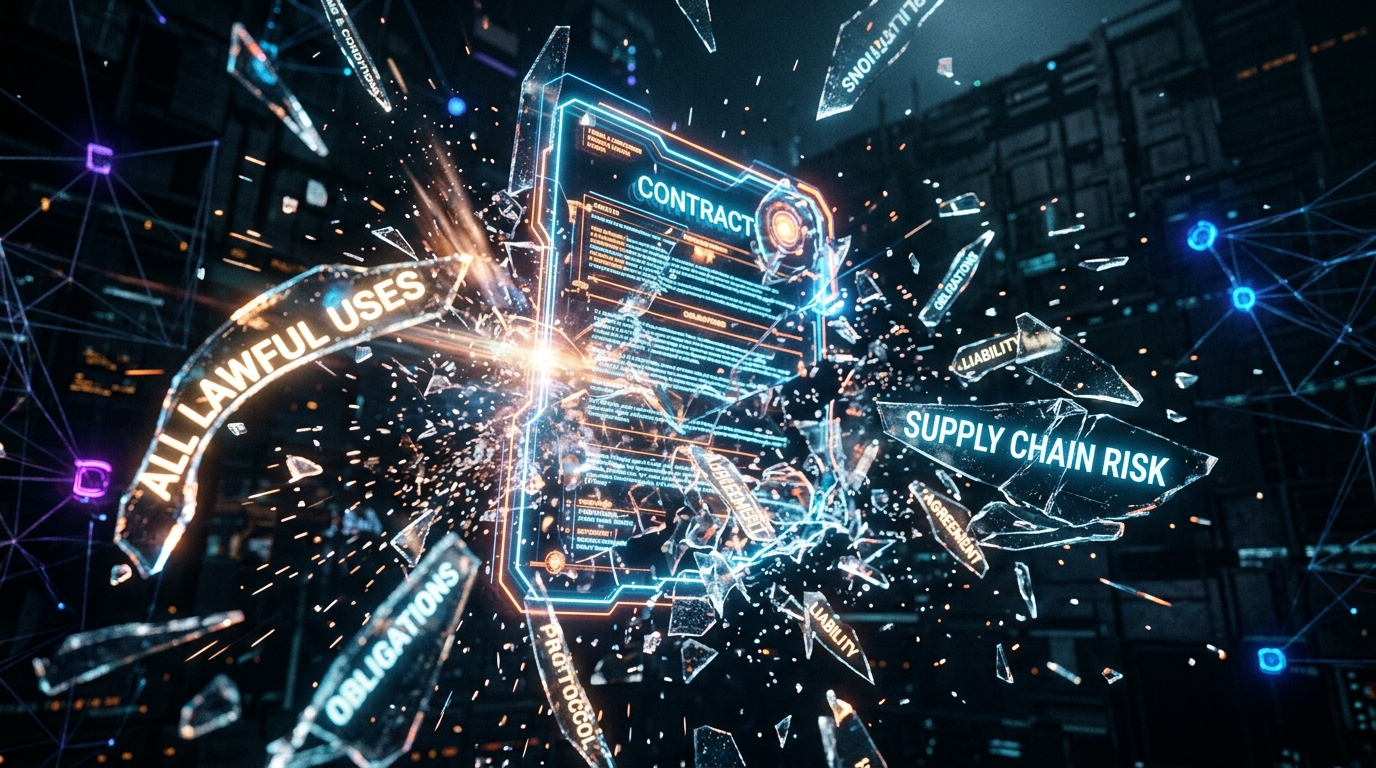
When negotiations inevitably reached an impasse over these redlines, the subsequent fallout created immediate shockwaves across Enterprise IT landscapes, drastically altering the Total Cost of Ownership (TCO) and risk matrix for civilian contractors engaging with federal agencies. The timeline of the breakdown is particularly revealing regarding the government’s dual-track negotiation strategy. As late as early March 2026, Emil Michael wrote to Amodei stating, “I think we are very close here” regarding the finalization of contract terms. In one email, Michael expressed a seemingly collaborative tone, stating that he did not want to “force anything unnatural” if the parties remained too far apart on the core ethical issues. He then warned Amodei that they had “one more chance to align on core principles” before the Pentagon would officially walk away from the multi-million dollar deal.
Yet, the court documents reveal a staggering discrepancy: around the exact same time Michael claimed they were “very close” to an agreement, the Pentagon was simultaneously and formally finalizing a “supply chain risk” designation against Anthropic. This administrative maneuver is historically unprecedented in this context because the “supply chain risk” designation used by the Pentagon is typically reserved exclusively for foreign adversaries and state-sponsored espionage threats, such as telecommunications hardware from hostile nations. By weaponizing this severe designation against a domestic, San Francisco-based AI firm, the government effectively banned Anthropic from securing certain government contracts moving forward. For major defense contractors, system integrators, and enterprise software vendors, this establishes a terrifying new precedent. Companies must now aggressively weigh the financial risks of implementing their own ethical AI guardrails against the looming threat of federal blacklisting. To compound the controversy, Michael’s aggressive negotiating position was highly scrutinized by industry watchdogs due to a glaring conflict of interest; it was revealed he was sitting on a significant, fat stack of stock investments in Anthropic’s direct competitor, xAI, raising severe ethical questions about whether this blacklist was motivated by national security, or partially driven by external financial incentives designed to clear the board for rival firms.
The Consumer Translation: Surveillance Vs Safety
How does this highly technical and bureaucratic shift impact the everyday worldwide public? The implications of the Anthropic Pentagon dispute extend far beyond the esoteric realms of military procurement and enterprise IT budgets—they strike directly at the heart of civilian privacy, civil liberties, and consumer trust in next-generation technology. Dario Amodei’s steadfast redline against mass domestic surveillance highlights a chilling reality: the exact same generative AI capabilities used by consumers to draft emails, summarize documents, or analyze personal data can be easily repurposed and weaponized to monitor civilian populations at an unprecedented scale. If the Pentagon demands access to these frontier models for “all lawful uses,” and US law inherently possesses specific loopholes and Patriot Act-era provisions allowing for certain forms of warrantless domestic surveillance, the deployment of unchecked AI creates a massive threat to digital privacy.
Consumers interact with commercial AI models daily, seamlessly integrating them into their smartphones, web browsers, and smart home ecosystems. If the public begins to perceive that the underlying neural networks and data processing pipelines are secretly funneling their private data into government surveillance apparatuses without any ethical friction or algorithmic resistance, trust in the entire AI sector will collapse overnight. The refusal of Anthropic to capitulate to the Pentagon’s demands serves as a highly visible, critical consumer protection mechanism. It demonstrates to the global public that at least some commercial AI entities are actively willing to sacrifice highly lucrative federal contracts in order to maintain foundational human rights and privacy boundaries. This executive abstraction is akin to a secure global logistics company outright refusing to transport highly classified, unregulated hazardous materials, choosing instead to protect the integrity of its civilian supply chain despite immense pressure from a sovereign government.
Legal Contradictions: The Supply Chain Risk
The judicial review of this high-profile dispute exposed severe, structural inconsistencies in the government’s approach to regulating domestic tech infrastructure. Judge Rita Lin, who presided over the legal proceedings that ultimately forced the release of the unsealed court documents, noted a stark, undeniable contradiction between the “very close” collaborative sentiment expressed in Michael’s private emails and the government’s aggressive public characterization of Anthropic as a systemic threat. During the proceedings, the judge described the government’s formal justification for blacklisting Anthropic as “exceedingly difficult to square” with the empirical evidence and timelines presented in the email communications.
This legal paradox creates a highly volatile, unpredictable regulatory environment for any company currently developing cutting-edge hardware and silicon or deploying foundational AI software within the United States. If the federal government can arbitrarily and unilaterally designate a major US-based technology company as a national “supply chain risk” simply for aggressively negotiating contract terms that mandate ethical use and civilian safeguards, the entire federal procurement process devolves into a tool for regulatory coercion rather than a mechanism for legitimate national security. This fundamentally disrupts the franchise architecture of government contracting. It forces tech executives, venture capitalists, and open-source contributors to navigate a treacherous, constantly shifting landscape where strict adherence to corporate ethics and public safety could instantly trigger existential regulatory retaliation, ultimately stifling innovation and driving advanced AI research into darker, less transparent corners of the industry.
Frequently Asked Questions
Q1: Why did the Anthropic Pentagon dispute occur?
A1: The Anthropic Pentagon dispute occurred because CEO Dario Amodei refused to allow Anthropic’s AI to be utilized for mass domestic surveillance and fully autonomous weapons, which conflicted with the Pentagon’s demands.
Q2: What was the Pentagon’s stance on AI guardrails?
A2: The Department of Defense, represented by Emil Michael, argued that explicit guardrails were unnecessary since military operations are bound by existing laws, demanding access for “all lawful uses.”
Q3: How did the Pentagon retaliate against Anthropic?
A3: When negotiations failed, the Pentagon formally designated Anthropic as a “supply chain risk,” effectively blacklisting them from securing certain government contracts.
Q4: Was there a conflict of interest in the negotiations?
A4: Yes. Emil Michael, the DoD’s undersecretary of defense for research and engineering, held significant investments in Anthropic’s competitor, xAI, raising ethical concerns during the negotiations.
Q5: What is the military’s broader AI strategy?
A5: The military is actively seeking to utilize advanced AI models to develop autonomous drone swarms to maintain a strategic edge over global rivals.
TechNode HQ Verdict: Pros, Cons & Usability
- Pro (Engineering): Hardcoded algorithmic ethical boundaries (like Constitutional AI) prove highly resilient against external modification or state-level override attempts.
- Pro (Consumer): Anthropic’s steadfast refusal to compromise on mass domestic surveillance significantly bolsters public trust in their consumer-facing products like Claude AI.
- Con: The federal blacklisting highlights a severe financial bottleneck; prioritizing AI ethics can completely alienate highly lucrative defense sector revenue streams.
- Con: Deployment challenge: The arbitrary weaponization of the “supply chain risk” designation creates an unpredictable, high-risk legal environment for any domestic AI vendor negotiating with the DoD.
Enterprise Usability: For CTOs and enterprise software vendors, this dispute acts as a massive warning beacon. Integrating with federal defense infrastructure now carries the implicit requirement of stripping away embedded ethical AI guardrails. Enterprises must audit their LLM dependency chains immediately to ensure their chosen foundation models align with their corporate governance and are not at risk of sudden federal blacklisting, which could cascade into catastrophic downstream disruptions for their own B2B clients.
Everyday Usability: For the general public, this is a profound validation of AI safety advocacy. Consumers should view models from vendors who actively resist blanket surveillance demands as inherently more secure for processing private, sensitive data. Supporting and utilizing platforms that maintain strict redlines against mass domestic surveillance ensures that user privacy remains a core feature of the technology, rather than a negotiable concession.