Key takeaways
- Launch: Red Hat’s first major platform upgrade in seven years introduces agentic AI troubleshooting via OpenShift Lightspeed and native in-place updates from OpenShift 4.
- OS Integrity & MCP: RHEL 10.3 and 9.9 add customer-keyed sealed images to thwart tampering, alongside a Model Context Protocol server for governed AI diagnostics.
- Modernization & Cryptography: OpenShift 5 integrates post-quantum cryptography for control planes and targets traditional virtualization replacements, representing an $800 million business.
Red Hat OpenShift 5 marks the platform’s first major version upgrade in seven years, introducing agentic artificial intelligence troubleshooting, cryptographic operating system protections, and in-place upgrade paths for hybrid cloud environments. Unveiled at KubeCon + CloudNativeCon North America in Salt Lake City, the release evolves the OpenShift Lightspeed assistant into an autonomous operational agent while adding post-quantum cryptography, automated graphics processing unit allocation, and hardened multitenancy. Red Hat concurrently detailed forthcoming updates for Red Hat Enterprise Linux 10.3 and 9.9 featuring sealed images and Model Context Protocol support, alongside Developer Hub 2.1 to govern coding agents across enterprise workflows.
Agentic Troubleshooting and In-Place Upgrades in OpenShift 5
The transition to OpenShift 5 expands the role of artificial intelligence within day-to-day cluster administration. While earlier iterations of OpenShift Lightspeed operated primarily as reactive text assistants answering user queries, the updated framework functions as an operational agent capable of investigating cluster anomalies, evaluating log streams, and identifying system errors. According to Red Hat Chief Technology Officer Chris Wright, this infusion of intelligence relies on agent-based troubleshooting driven by natural-language requests.
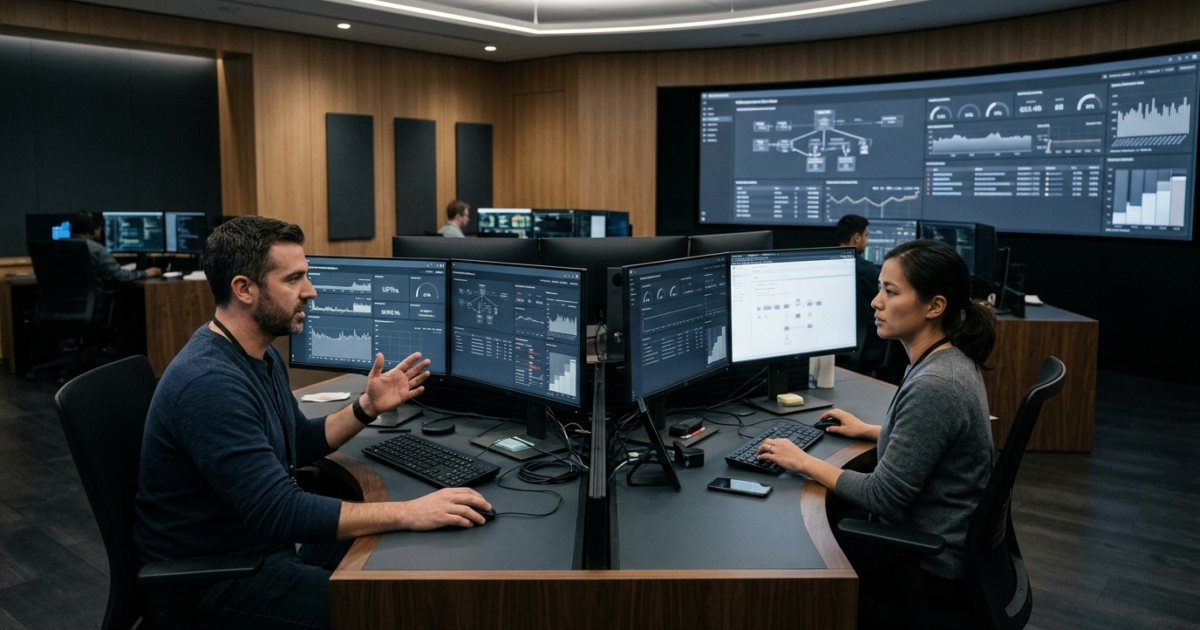
Administrators can prompt the interface to generate real-time performance visualizations—such as correlating central processing unit utilization over the preceding week with memory consumption and application error spikes—and save those dynamic views directly into continuously updating dashboards. Beyond reporting, OpenShift 5 introduces agentic diagnostic workflows that activate when cluster failures occur. The system analyzes relevant cluster state metrics, assesses likely causal factors, and formulates step-by-step remediation plans. Red Hat emphasized that human operators retain supervisory control, requiring manual authorization before any recommended operational changes take effect.
A persistent operational friction point for enterprise platform teams has been cluster lifecycle upgrades. Moving between major Kubernetes infrastructure revisions historically required complex migrations or clean reinstallation. OpenShift 5 addresses this by supporting native in-place updates from OpenShift 4 clusters, avoiding workload evacuation and cluster rebuilds. To support this path, Red Hat added an automated upgrade planner that reviews application dependencies, Kubernetes application programming interfaces, and active operators to flag compatibility conflicts before administrators trigger updates. Mike Barrett, Red Hat vice president and general manager of hybrid cloud platforms, noted that while upgrading Kubernetes itself is straightforward, managing dependent application stacks presents the primary enterprise bottleneck.
Operating System Integrity and Model Context Protocol Governance

Infrastructure security enhancements in the release extend down to the operating system level across upcoming releases of Red Hat Enterprise Linux 10.3 and 9.9. The centerpiece of RHEL 10.3 is the introduction of sealed images, which establish cryptographic verification across the bootloader, kernel, and root file system using customer-controlled keys. This immutable validation model is designed to prevent unauthorized code modifications and ensure untrusted or compromised software components cannot execute.
To integrate operating system diagnostics into emerging AI workflows safely, Red Hat is deploying a native server implementation of the Model Context Protocol. The protocol interface links compatible AI agents with Performance Co-Pilot, an open-source instrumentation framework for system performance monitoring. This integration enables AI models to analyze live operational conditions alongside historical telemetry under strict, enterprise-defined permission boundaries. For air-gapped data centers, sovereign clouds, and regulated facilities where external network transmission is prohibited, a developer preview of a self-managed command-line assistant allows organizations to host AI inference locally.
Platform security also accounts for future cryptographic shifts. OpenShift 5 incorporates post-quantum cryptography into control-plane communication channels, while RHEL adds post-quantum key encapsulation support for Go applications using the Module-Lattice-Based Key-Encapsulation Mechanism in Transport Layer Security configurations.
Enterprise Virtualization and Regulated Cloud Impact
The architectural enhancements across OpenShift 5 and RHEL arrive amid significant vendor realignment across enterprise virtualization. Red Hat disclosed that OpenShift Virtualization has expanded into an $800 million business as IT departments migrate away from legacy hypervisors. Enterprise case studies cited by Red Hat include NASA’s laboratory migrating approximately 2,400 virtual machines to the platform, and industrial manufacturer Gates Corp. transitioning over 1,300 virtual machines while realizing a reported 50% increase in available compute capacity.
To address sovereign cloud requirements and strict enterprise isolation mandates, OpenShift 5 introduces hardened multitenancy, expanded network segmentation, and automated certificate lifecycle management. Automated GPU resource allocation also enables shared scheduling across AI inference tasks and conventional enterprise workloads, lowering the idle hardware expense of specialized accelerators.
| Platform Release | Core Operational Capability | Enterprise Security & Infrastructure Impact |
|---|---|---|
| OpenShift 5 | Agentic Lightspeed troubleshooting and in-place upgrade planner | Autonomous root-cause analysis with human approval; zero-migration updates from OpenShift 4 |
| RHEL 10.3 & 9.9 | Sealed OS images and Model Context Protocol server integration | Cryptographic boot-to-root tamper protection; governed AI access to Performance Co-Pilot telemetry |
| Developer Hub 2.1 | Governed AI coding agent integration with expanded cataloging | Constrains autonomous developer agents to sanctioned software components and standardized workflows |
What happens next
Red Hat OpenShift 5 and Red Hat Developer Hub 2.1 are generally available immediately, while Red Hat Enterprise Linux 10.3 and 9.9 are scheduled for distribution in the coming weeks. Platform architecture teams evaluating OpenShift 5 should begin by running the pre-upgrade compatibility planner against staging OpenShift 4 environments to catalog deprecated APIs and operator dependencies.
Enterprise security teams must establish clear policy boundaries for MCP-connected operational agents, determining which administrative roles can approve suggested cluster remedies. Organizations evaluating virtualization migration should benchmark guest workload performance on OpenShift Virtualization against current hypervisor costs, while teams supporting sovereign clouds should audit control-plane readiness for post-quantum cryptographic handshakes.
Sources: SiliconANGLE, Red Hat Announcements.