Key takeaways
-
- SAP finalized its acquisitions of Dremio and Reltio, embedding federated SQL acceleration and master data management directly into SAP Business Data Cloud.
- The platform adds native Apache Iceberg support and an Apache Polaris-powered universal catalog, enabling zero-copy data federation across major clouds.
- New Ontology Manager tools and an expanded Databricks partnership provide curated enterprise context to ground autonomous Joule agents in operational logic.
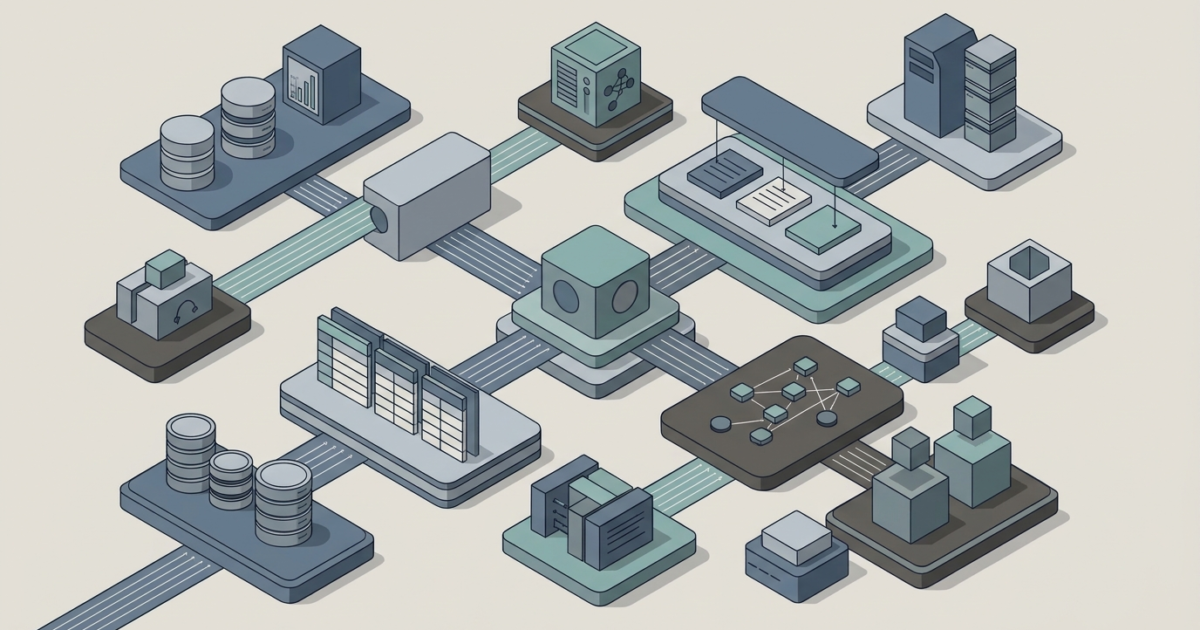
At SAP TechEd Berlin, SAP announced structural enhancements to SAP Business Data Cloud (SAP BDC) aimed at establishing an open lakehouse and business data fabric for enterprise AI agents. The announcements center on the completed acquisitions of Dremio and Reltio, introducing native Apache Iceberg support, an Apache Polaris-powered universal catalog, and general availability for multi-domain master data management. Combined with an expanded Databricks partnership and the new SAP BDC Ontology Manager, these capabilities allow organizations to federate, govern, and contextualize distributed enterprise data without creating redundant copies, providing autonomous agents like Joule with the operational rules and semantic accuracy required for high-stakes business decisions.
Open lakehouse foundation and federated querying
Enterprise data landscapes remain inherently fragmented across relational databases, analytical warehouses, and object storage lakes. Traditionally, connecting these environments forced data engineering teams to duplicate datasets via complex extract, transform, and load (ETL) pipelines, driving up storage expenses, increasing latency, and breaking semantic consistency. With the completed acquisition of Dremio, SAP has integrated an open lakehouse engine into SAP BDC to support zero-copy federation.
The platform now natively supports Apache Iceberg table formats and implements a universal catalog powered by Apache Polaris. Working alongside SAP BDC Connect, this foundation establishes zero-copy data sharing across third-party environments, including Databricks, Snowflake, Google Cloud, Amazon Web Services (AWS), and Microsoft Azure. Through Dremio’s distributed SQL engine, enterprises can federate queries across lakehouses and relational databases such as Microsoft SQL Server, Oracle Database, PostgreSQL, and MongoDB without moving underlying records from source systems.
For end users, the federated engine interfaces directly with Joule Work, allowing employees to submit natural language queries that draw answers from unified SAP and custom data products. For data engineering teams, query performance is managed by Dremio’s Reflection technology. Rather than requiring developers to manually build summary tables or schedule materialized view refreshes, Reflections analyzes active query workloads and automatically precomputes optimized acceleration structures. As data usage patterns change, Reflections adjusts autonomously to maintain sub-second response times for both analyst dashboards and high-concurrency agentic workloads.
Master data resolution and domain knowledge graphs
A primary obstacle to deploying autonomous software agents in production is inconsistent master data. The same customer, product, or vendor often exists under divergent identifiers and conflicting schemas across enterprise applications. When an agent acts on these records without reconciliation, it risks executing faulty transactions or hallucinating business states.
To address this risk, SAP announced the general availability of SAP Reltio inside SAP BDC, following the completion of its Reltio acquisition. SAP Reltio embeds multi-domain master data management (MDM) natively into the data fabric, utilizing machine-learning-based entity resolution to match, deduplicate, and merge customer, supplier, and product records across SAP and third-party systems. These unified 360-degree profiles are then published as governed data products within SAP BDC, giving Joule agents verified context before executing actions.
To translate structural data into operational decision-making, SAP introduced the SAP Business Data Cloud Ontology Manager. While the overarching SAP Knowledge Graph maps thousands of entities, relationships, and business policies across an enterprise, individual agents require focused, task-specific views. Ontology Manager provides an AI-assisted interface that lets technical teams curate domain-specific semantic models, such as collections or order processing. A collections agent, for example, can be granted a scoped ontology linking customer identities, open invoices, credit terms, and payment risk, ensuring its recommendations adhere to corporate accounting policies. Because these models inherit definitions directly from the central SAP Knowledge Graph, semantics can be reused across adjacent workflows without redefining business logic, complementing earlier deployments of agentic AI assistants for cloud ERP migrations.
“With SAP Business Data Cloud, we are building an enterprise foundation that unifies, governs, and is ready for innovation, so analytics and AI can scale without compromising the quality, compliance, and trust,” stated Ganesh Sivakumar, Global Chief Data Analytics & AI Officer at Mead Johnson Nutrition.
Expanded Databricks integration and tabular models
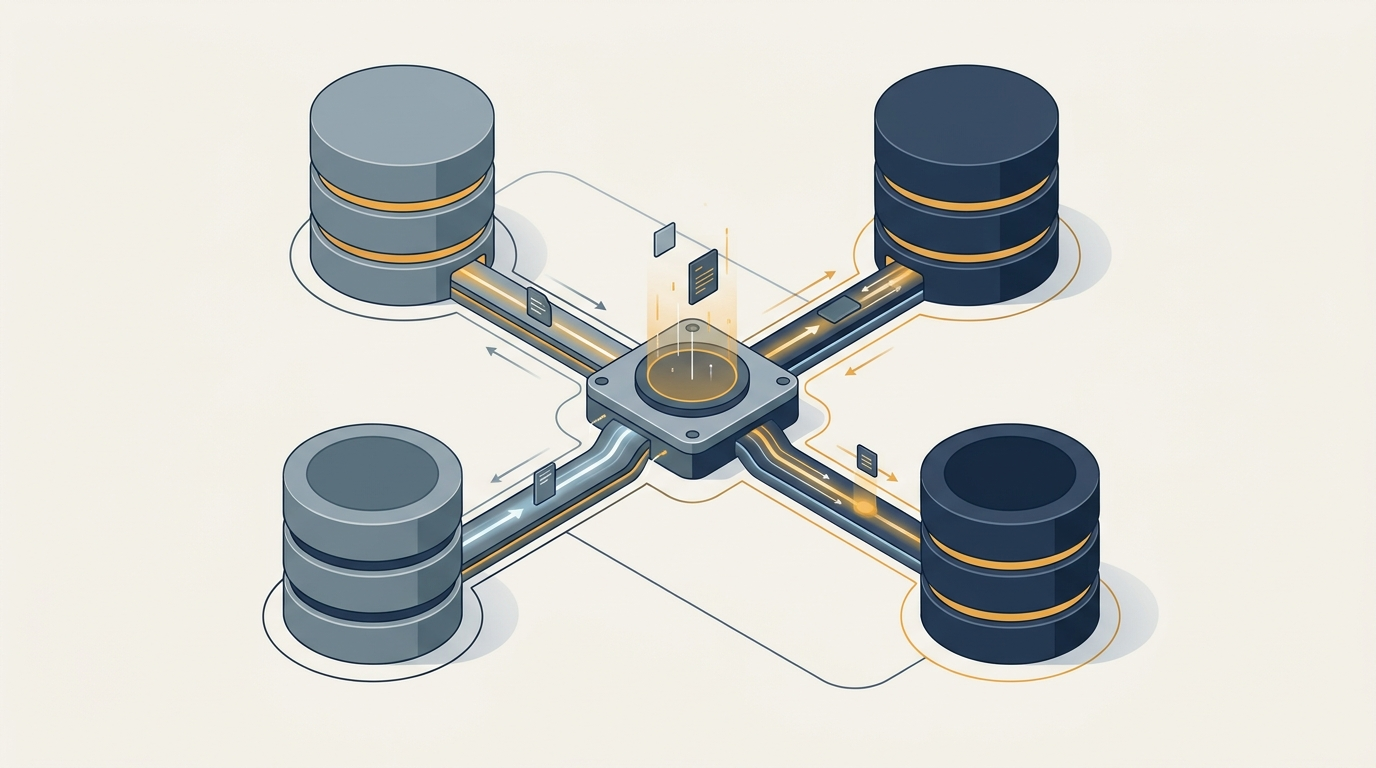
SAP also expanded its technical partnership with Databricks, embedding core Databricks components directly into SAP Databricks within SAP BDC. Enterprise teams now gain access to Lakeflow, Agent Bricks, Unity Gateway, and Lakebase natively. Underpinning this integration is the SAP Application Data Foundation, which exposes data from core SAP business applications to external computational engines while preserving business semantics and lowering total cost of ownership.
Through this architecture, data engineers can combine SAP operational datasets with third-party market data inside SAP Databricks using zero-copy sharing via SAP BDC Connect. For example, industrial manufacturers can blend historical sales, plant inventory levels, and logistics records directly with external macroeconomic signals to train demand forecasting models that remain grounded in existing SAP enterprise logic.
| Component | Underlying Technology | Enterprise Function |
|---|---|---|
| Federated Query Engine | Dremio SQL & Reflection engine | Zero-copy SQL federation across Iceberg, SQL Server, Oracle, MongoDB, and Postgres with automated acceleration. |
| Universal Catalog | Apache Polaris & Apache Iceberg | Open, interoperable metadata governance and data sharing across Snowflake, Databricks, AWS, Google Cloud, and Azure. |
| Master Data Management | SAP Reltio (General Availability) | Multi-domain master data entity resolution reconciling customer, supplier, and product entities across enterprise systems. |
| Domain Context Modeling | SAP BDC Ontology Manager | Curated, domain-specific subsets of the SAP Knowledge Graph to ground Joule agents in verified business rules. |
Complementing the data fabric updates, SAP unveiled specialized tabular foundation models, including SAP-RPT-2.0 and SAP-RPT-TS, tailored specifically for structured enterprise tabular data, anomaly detection, and time-series forecasting. The models were demonstrated in constrained environments, including an edge computing deployment on HPE Spaceborne Computer-2 aboard the International Space Station, underscoring SAP’s emphasis on deploying compact, high-efficiency models alongside its data platform.
What happens next
Enterprise architects and IT leaders evaluating SAP Business Data Cloud should begin by assessing their existing data replication overhead. Organizations running parallel ETL jobs to feed data warehouses like Snowflake or Databricks can explore SAP BDC Connect and Apache Polaris catalog federation to verify whether zero-copy sharing can eliminate pipeline maintenance and reduce cross-cloud data egress charges.
Teams preparing for autonomous agent rollouts should evaluate their master data quality. With SAP Reltio now generally available, data governance leads should audit entity duplication across customer and supplier tables to determine where automated entity resolution is required before granting AI agents transactional authority. Concurrently, platform teams should test Dremio Reflection performance against production SQL workloads to verify that automated precomputation meets concurrency and latency targets without requiring dedicated engineering overhead.