Key takeaways
- Physical device labs inflate mobile engineering costs primarily through developer idle time and provisioning friction rather than device acquisition.
- Routine builds, unit tests, regression suites, and bug reproduction do not require physical hardware and can execute on software-defined Android instances.
- Canonical’s Anbox Cloud enables a tiered execution model: lightweight containers for application density, virtual machines for custom AOSP kernels, and physical devices for hardware sensors.
- Integrating ephemeral Android instances into CI/CD pipelines eliminates configuration drift, enables mass parallel testing, and contracts multi-hour queues into minutes.
- Enterprise platform teams must evaluate cloud compute and GPU streaming overheads against device lab savings to ensure net operational gains.
Lowering Android development costs requires removing physical devices from the critical path of software builds, regression testing, and bug reproduction. While physical hardware remains indispensable for validating custom sensors, camera optics, and peripheral integrations, relying on physical device labs for daily continuous integration creates severe operational bottlenecks. These bottlenecks trigger expenses across three primary areas: capital procurement for peak testing capacity, manual operational maintenance and device resets, and developer idle time spent waiting for shared test benches. By replacing routine hardware testing with on-demand, software-defined Android instances orchestrated in server environments, enterprise platform teams can parallelize automated pipelines, eliminate configuration drift, and reduce total engineering expenditures.
The Three Cost Drivers of Hardware-First Android Labs
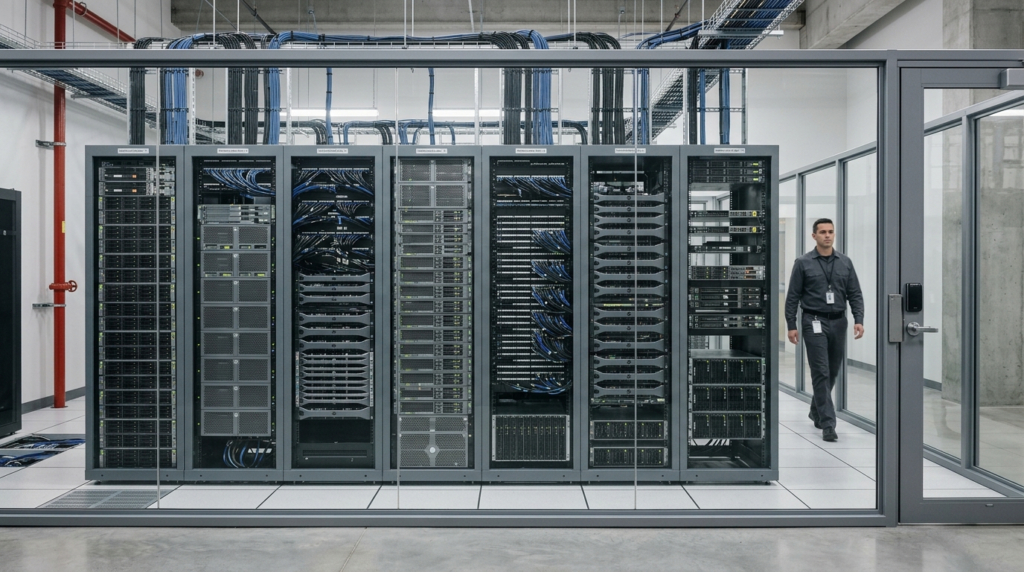
Enterprise mobile engineering budgets frequently conceal the true price of physical test labs. Financial analyses routinely track device purchase orders while obscuring the operational and personnel drag required to keep physical hardware functional. When teams evaluate mobile infrastructure expenses, costs concentrate in three distinct categories:
- Hardware Capital Expenditure: Procuring fleets of smartphones, reference boards, test racks, custom USB hubs, and cooling enclosures. Because engineering demand peaks prior to release deadlines, organizations routinely over-provision hardware to absorb burst traffic that sits unutilized during normal development cycles.
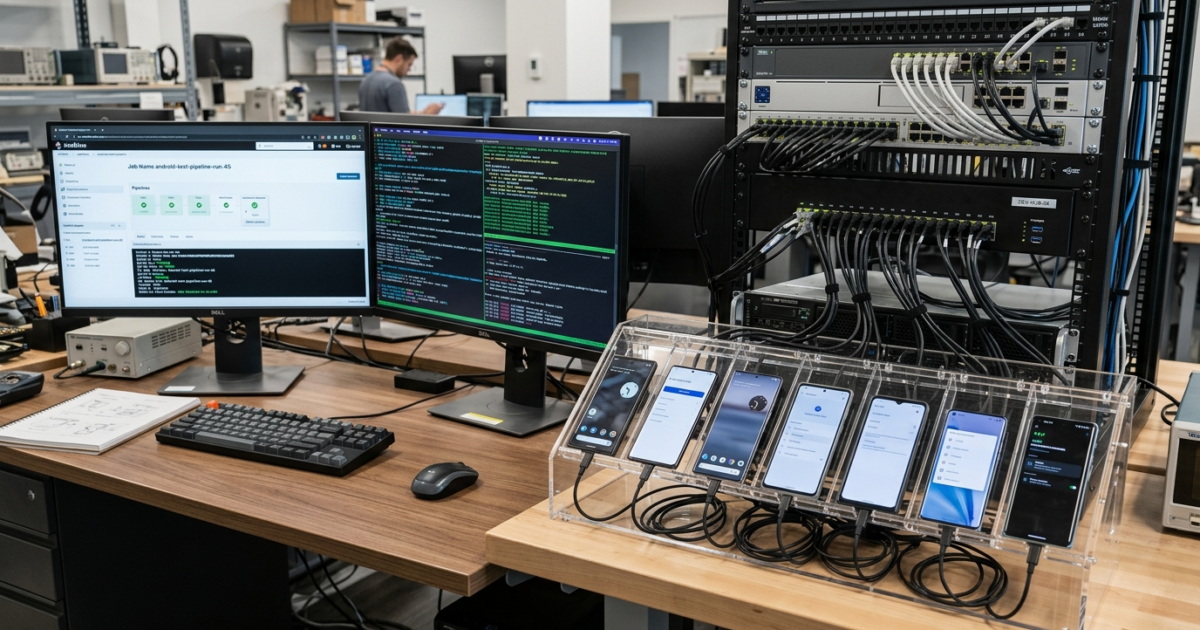
- Operational and Administrative Overhead: Maintaining physical infrastructure demands continuous human intervention. Technicians and developers spend hours flashing firmware, troubleshooting flakey USB connections, replacing swollen lithium-ion batteries, and reconfiguring OS versions to match specific defect reports.
- Engineering-Time Losses: The most damaging cost driver is developer idle time. When automated build systems queue behind a fixed set of physical test benches, engineers wait for pipeline completion. An idle engineer blocked by an unavailable test rig represents an ongoing operational loss that dwarfs the unit cost of testing hardware.
As development organizations expand, linear hardware scaling breaks down. Adding more engineers generates more pull requests, more regression runs, and broader matrix combinations of operating systems and screen sizes. Supporting this volume exclusively with physical test benches leads to diminishing returns and mounting logistical complexity.
Decoupling Routine Workloads from Physical Silicon
The solution to device lab bottlenecks is not the complete eradication of physical testing hardware, but a rigorous triage of test requirements. For years, mobile development workflows defaulted to running every validation step on physical targets simply because the tooling was originally designed around tethered USB devices. However, modern Android architecture decouples software logic from underlying silicon through well-defined abstraction layers.
Engineering leaders must evaluate which workloads genuinely require physical components and which can execute purely in software:
- Software-Defined Workloads: Unit tests, business logic verification, application regression suites, API contract testing, localization checks, and multi-version bug reproduction. These tasks validate framework-level and application-level behavior. They require an Android runtime, but have zero technical dependency on physical accelerometers, baseband processors, or battery management circuits.
- Hardware-Dependent Workloads: Camera tuning, hardware sensor integration, proprietary peripheral communication over physical buses, thermal throttling tests, and carrier certification. These tests evaluate the interplay between firmware, board schematics, and analog silicon.
By moving software-defined workloads into programmable cloud infrastructure, enterprise teams liberate their physical device racks. Expensive specialized test benches can then be reserved exclusively for the narrow slice of certification tests that truly justify hardware execution.
Execution Environments: Containers, Virtual Machines, and Benches
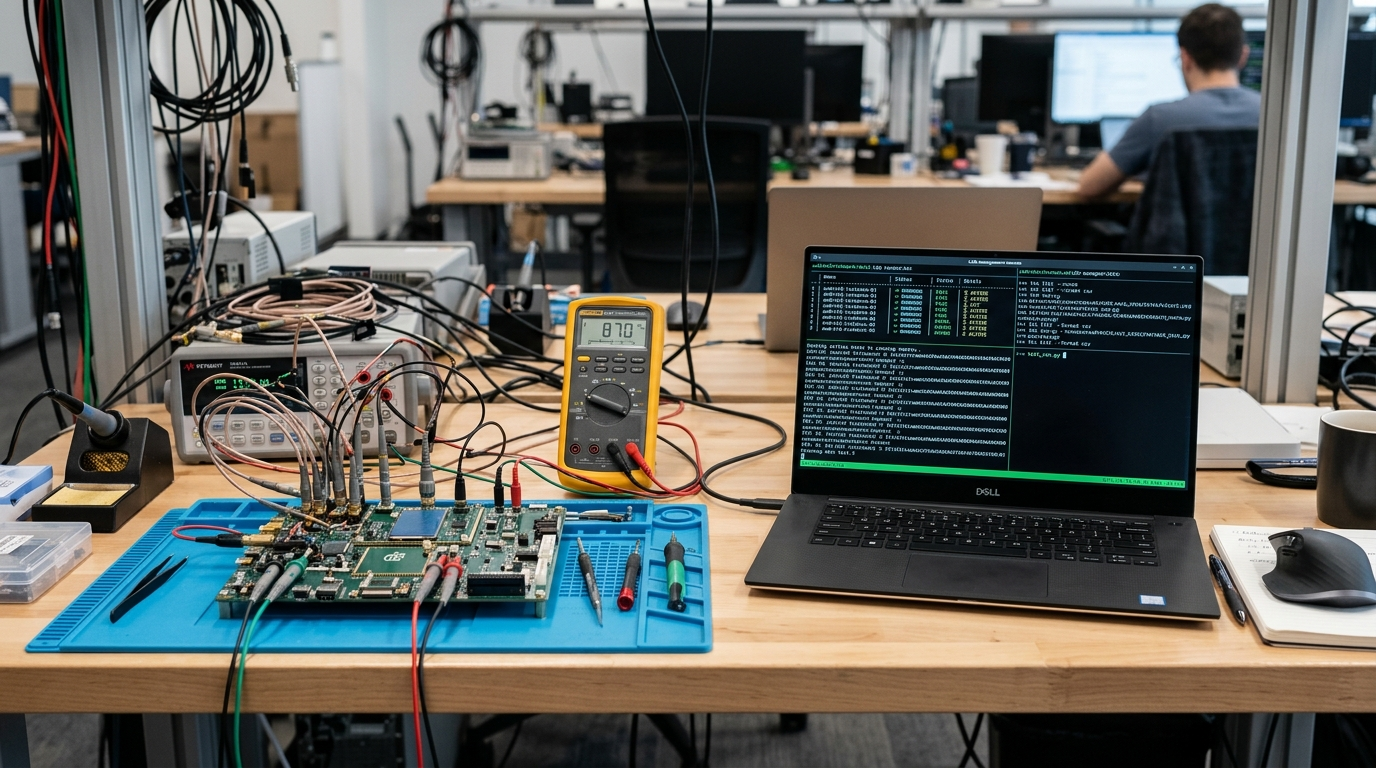
Transitioning away from hardware-first workflows requires selecting the right execution environment for each specific engineering task. In modern cloud-native architectures—such as Canonical’s Anbox Cloud platform—enterprises can deploy Android environments across a tiered infrastructure model combining system containers, virtual machines, and dedicated physical benches.
| Execution Model | Underlying Architecture | Startup Latency | Instance Density | Primary Workload Suitability |
|---|---|---|---|---|
| System Containers (LXD) | Shared host Linux kernel with namespace and cgroup isolation | Sub-second to 3 seconds | High (up to 100+ instances per host depending on GPU/RAM) | Standard app testing, UI validation, CI/CD smoke tests, and app streaming |
| Virtual Machines (QEMU/KVM) | Dedicated guest Linux kernel, isolated bootloader, full OS virtualization | 15 to 45 seconds | Moderate (bounded by CPU core allocation and memory virtualization) | Custom AOSP builds, custom kernel drivers, modified HALs, and Android Automotive OS |
| Physical Hardware Benches | Dedicated silicon, physical device boards, tethered USB connections | Static (continuous run, manual reset required) | Single tenant per device bench | Sensor calibration, hardware peripheral integration, thermal validation, RF testing |
System containers managed through LXD provide the highest operational efficiency for standard application engineering. Because the container shares the underlying Linux kernel with the host server, instances boot in seconds and consume minimal memory overhead. Multiple Android application runtimes can operate concurrently on a single physical server, maximizing compute utilization.
Conversely, when engineering teams develop custom platform software—such as automotive digital cockpits, industrial handhelds, or proprietary AOSP distributions—system containers may be insufficient because the guest cannot modify the host kernel. In these scenarios, virtual machines running isolated Android kernels provide the necessary architectural depth while retaining the automated provisioning advantages of cloud infrastructure.
Integrating Software-Defined Android into CI/CD Pipelines
The primary productivity dividend of software-defined Android environments is realized within continuous integration and continuous deployment pipelines. In traditional hardware setups, pipeline jobs execute sequentially against shared device pools. If twenty engineers submit pull requests simultaneously, jobs queue in line, delaying feedback loops and disrupting developer velocity.
With cloud-hosted Android instances, infrastructure orchestration aligns with modern DevSecOps practices:
- On-Demand Ephemeral Provisioning: The CI runner triggers an API call to instantiate a pristine Android container or virtual machine matching the exact target configuration (Android version, display density, locale, and system image).
- Automated Toolchain Attachment: The instance exposes standard interfaces, including Android Debug Bridge (ADB), allowing existing testing tools—such as Android Studio, Espresso, Appium, and Robolectric—to attach without specialized client modifications.
- Parallel Test Execution: Instead of queuing tests behind a single device, test runners shard test suites across dozens of concurrent instances, compressing multi-hour regression runs into minutes.
- Immediate Destruction and Zero State Drift: Once tests conclude and artifacts are collected, the container or virtual machine is terminated. This guarantees that residual test artifacts, modified system settings, or cache corruption cannot pollute subsequent pipeline executions.
This automated lifecycle eliminates configuration drift—a persistent problem in physical labs where prior test runs leave residual files or altered permissions that produce false-positive test failures.
Enterprise Migration Risks, Governance, and Infrastructure Costs
While shifting Android workloads to the cloud delivers clear operational benefits, enterprise IT directors and infrastructure architects must account for technical and financial trade-offs. Moving away from physical devices is not without cost, and platform teams must evaluate several core factors before executing a migration:
- Compute and Acceleration Costs: Running Android instances at scale requires robust server infrastructure. Android user interfaces rely on OpenGL ES and Vulkan rendering. Without GPU acceleration or efficient software rasterization, host CPU utilization spikes dramatically. Organizations must balance the cost of GPU-equipped cloud instances (or on-premises bare-metal servers) against physical lab savings.
- Architecture and Instruction Set Translation: The vast majority of production Android devices utilize Arm silicon. If cloud Android environments run on x86-based server infrastructure, workloads requiring native ARM libraries must pass through binary translation layers, introducing performance overhead. Deploying on Arm-based cloud infrastructure—such as AWS Graviton or Ampere bare-metal instances—mitigates this translation penalty.
- Network Bandwidth and Video Streaming: For manual QA sessions requiring remote screen interaction, platforms utilize low-latency WebRTC streaming. Enterprise networks must accommodate the outbound video bandwidth generated by dozens of concurrent interactive testing sessions.
- Governance and Security: Centralizing Android instances within enterprise VPCs improves governance compared to physical devices that can be misplaced or mishandled. However, images must be routinely patched and scanned for vulnerabilities within the continuous delivery pipeline.
Bottom line
Treating physical devices as a mandatory prerequisite for every Android development task is an outdated engineering habit that inflates operational budgets and slows release velocity. Enterprise mobile engineering organizations should audit their existing testing suites and separate software-defined validation from true hardware certification.
By migrating app builds, regression suites, and bug reproduction to automated container and virtual machine platforms, platform leaders can eliminate developer wait times and turn testing capacity into an elastic cloud resource. Physical hardware benches should remain an essential, but specialized, tier of the testing hierarchy—reserved strictly for the validation challenges that only physical silicon can solve.