Key takeaways
-
- Cisco AI Defense has expanded its open-source DefenseClaw platform with an Edge Connector designed for constrained IoT hardware like Raspberry Pi and NVIDIA Jetson.
- The lightweight connector intercepts AI agent tool calls in microseconds, enforcing security policies before instructions reach physical motors, sensors, or shell environments.
- Security checks run through a tripartite model: safe operations are permitted locally, policy violations are blocked prior to token inference, and ambiguous actions escalate with fail-closed safeguards.
- The architecture addresses physical AI risks across industrial robotics, agricultural drones, and smart buildings without incurring cloud round-trip latency.
The DefenseClaw Edge Connector is an open-source security enforcement component released by Cisco AI Defense to govern autonomous AI agents deployed on resource-constrained physical devices. Operating directly on compact hardware such as the Raspberry Pi, NVIDIA Jetson modules, and embedded Linux controllers, the component intercepts tool calls between agent software and physical actuators in microseconds. Rather than attempting to run a full enterprise security engine on low-power chips, the Edge Connector splits governance tasks into fast local evaluation and centralized upstream analysis. By enforcing strict allow, block, and escalate policies, the runtime layer prevents compromised AI agents from turning malicious inputs into unauthorized kinetic actions.
Intercepting Tool Calls on Constrained Hardware
As autonomous agents transition from server-side software workflows to real-world operational environments, their failure modes shift from digital data leakage to physical safety risks. An AI agent managing an enterprise server might expose sensitive database records when compromised. In contrast, an AI agent operating industrial machinery, warehouse robotics, or building automation systems can directly endanger personnel and physical assets if its decision-making logic is hijacked.
According to architectural details published by Cisco Blogs, the primary engineering barrier to securing physical AI has been hardware resource limits. Embedded microcontrollers and edge compute boards cannot host heavy language models, deep packet inspection engines, or extensive security analytics stacks. Security teams frequently faced an untenable compromise: route every actuator command through cloud verification—introducing prohibitive network latency and connectivity failure risks—or permit the physical agent to execute tool calls unmonitored.
The Edge Connector resolves this trade-off by functioning as a lightweight gateway shim that sits directly in the path between the AI agent and the hardware interfaces. Developed under the open-source DefenseClaw project, the connector hooks into the runtime execution loop, inspecting requests to read sensors, trigger motor controllers, invoke shell commands, or query external network endpoints.
Three-Tier Policy Enforcement and Fail-Closed Mechanics
To deliver deterministic protection without stalling physical workflows, the Edge Connector implements a tripartite evaluation architecture. Incoming tool calls are classified into three operational categories based on pre-compiled local policies and historical cached determinations.
| Evaluation Tier | Operational Criteria | Enforcement Mechanism | Network Dependency |
|---|---|---|---|
| ALLOW | Read-only sensor checks, local file reads, cached approvals, and non-denied tools. | Microsecond local execution pass-through to hardware controllers. | None (fully autonomous on-device decision). |
| BLOCK | Denied network destinations, prompt injections, known-bad tool hashes, and unapproved motor controls. | Immediate termination at the edge before LLM inference or actuator signaling occurs. | None (enforced locally without cloud verification). |
| ESCALATE | Unseen tools, uncached commands, or ambiguous parameters without explicit local rules. | Forwarded to central DefenseClaw instance for deep behavioral analysis; fails closed if disconnected. | Requires connection to central instance for high-risk actions. |
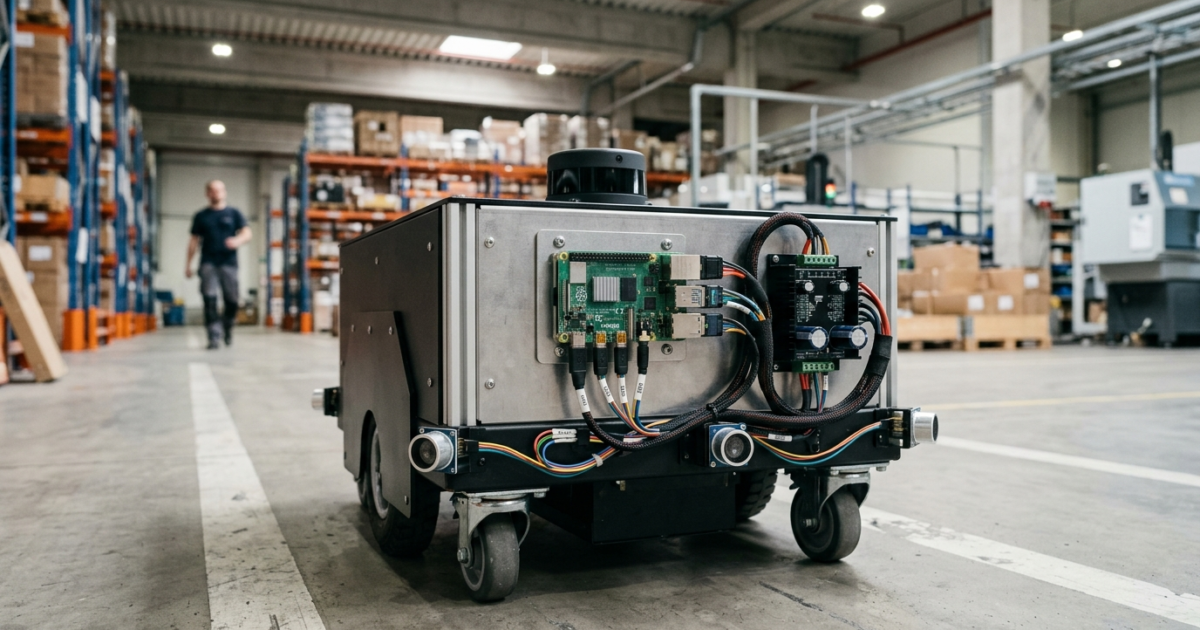
A critical architectural property of the system is its pre-inference defense capability. In physical testing conducted on a Raspberry Pi controlling a wheeled robotics platform, researchers demonstrated that the Edge Connector intercepts prompt injections before the local model performs token inference. When a malicious instruction hidden within a shipping barcode instructed the robot to disregard obstacle detection and accelerate forward, the connector matched the payload against local denial patterns and aborted the command instantly. Zero compute tokens were consumed, and the actuators remained completely inert.
For compound operational tasks that combine benign data collection with high-risk motor control, the framework applies granular per-action gating. A mobile robot instructed to sweep an area with ultrasonic sensors and subsequently navigate into an unverified zone is permitted to complete the sensor read. However, when the agent attempts the kinetic driving command without explicit authorization, the call is blocked under the fail-closed mandate. This granular inspection prevents attackers from disguising dangerous instructions behind multi-step routines, a common risk highlighted in research on stopping zero-click indirect attacks on AI agents.
Mitigating Physical Risks Across Enterprise IoT
The release addresses a widening governance void across enterprise edge environments, including smart facilities, supply chain robotics, and autonomous agricultural equipment. In connected facilities, an unvalidated prompt delivered via building telemetry could mislead an environmental agent into disabling fire suppression systems. In agricultural deployments, a compromised weather forecast API could inject instructions that steer chemical spray drones away from fields toward residential perimeters.
By shipping the Edge Connector as a native component of DefenseClaw, Cisco allows enterprise IT and operations teams to apply consistent security policies across both digital agent runtimes and edge robotics. Security engineers do not need to maintain separate toolchains for server-based assistants and physical hardware. The connector integrates alongside complementary components like the Cisco AI Defense Skill Scanner, which scans agent skills and tool definitions for vulnerable behaviors before deployment. Furthermore, every edge decision is captured in a local, tamper-evident audit log that synchronizes with central enterprise SIEM platforms when network connectivity is established.
What happens next
The Edge Connector is available immediately within the open-source DefenseClaw repository for deployment across standard Linux edge distributions. Operations and platform engineering teams running autonomous edge devices can compile and test the connector across Raspberry Pi, NVIDIA Jetson, and embedded industrial gateways without licensing fees.
While the initial release validates fast on-device filtering for known threat vectors, enterprise adoption will depend on how effectively teams manage edge policy synchronization across thousands of distributed endpoints. As organizations scale autonomous agent deployments from laboratory prototypes to active factory floors, security leaders will need to establish rigorous change-management pipelines for local policy caches, verify network fail-closed thresholds under intermittent connectivity, and benchmark microsecond latency tolerances against real-time industrial robotics standards.