
Key takeaways
- Elastic Cloud Serverless launched in Microsoft Azure Central US (Iowa) on September 29, 2026, reaching 34 cloud regions globally and 12 on Microsoft Azure.
- Built on Azure Kubernetes Service and Azure Blob Storage, the decoupled architecture separates search and ingest compute to scale independently without cluster sizing or shard balancing.
- The platform provides four specialized project types: Elasticsearch, Vector Database, Observability, and Security, eliminating maintenance windows and capacity planning.
- Enterprise governance integrations include Azure Private Link, Microsoft Entra ID single sign-on, and consolidated billing eligible for Microsoft Azure Consumption Commitments (MACC).
Elastic announced the availability of Elastic Cloud Serverless in Microsoft Azure’s Central US (Iowa) region on September 29, 2026. The launch expands Elastic’s global serverless footprint to 34 cloud regions, including 12 hosted on Microsoft Azure. Built on a decoupled architecture, the platform separates search and ingest compute, removing the need for manual cluster sizing, shard balancing, and maintenance windows. The Iowa rollout gives midwestern enterprise workloads lower-latency access to four serverless project types: Elasticsearch, Vector Database, Observability, and Security. Azure customers can deploy projects directly through the Azure Marketplace with consolidated billing against Microsoft Azure Consumption Commitments (MACC), protected by Azure Private Link and Microsoft Entra ID single sign-on.
Central US Expansion and Regional Coverage
The introduction of the Central US region marks the twelfth Azure region supported by Elastic Cloud Serverless, reinforcing Elastic’s infrastructure availability across North America. For regional enterprises, hosting data within the Iowa zone provides localized data residency and minimizes round-trip network latency for applications operating in adjacent Azure data centers.
According to Elastic’s release notes, serverless deployments provide immediate access to continuous feature updates, including cross-project search capabilities. Rather than deploying static virtual machine clusters that require routine patching, organizations instantiate isolated projects that run on shared underlying infrastructure. This operational shift targets workloads characterized by unpredictable traffic patterns, such as retail catalog queries or multitenant software-as-a-service (SaaS) environments where tenant isolation must be established programmatically without node-level overhead.
Elastic provides four workload-tailored project templates within the serverless environment:
- Elasticsearch Serverless: General-purpose text, document, and numeric analytics for custom enterprise applications.
- Elasticsearch Vector Database: Dedicated semantic search, embeddings indexing, and retrieval-augmented generation (RAG) pipelines.
- Elastic Observability Serverless: Telemetry ingestion for application performance monitoring (APM), distributed traces, and log metrics.
- Elastic Security Serverless: Centralized security information and event management (SIEM) and threat response analytics.
Decoupled Architecture and the Search AI Lake
The technical foundation of Elastic Cloud Serverless departs from traditional Elasticsearch cluster topology. Rather than coupling indexing throughput and query processing within the same compute nodes, Elastic separates ingest and search into independently scalable compute tiers. As detailed in APMdigest’s technical review, the Azure implementation relies on Azure Kubernetes Service (AKS) for dynamic compute orchestration and Azure Blob Storage as the underlying persistent tier for Elastic’s Search AI Lake architecture.
This separation mitigates operational bottlenecks during incident investigations. In legacy architectures, a massive spike in incoming application logs during a system outage often saturated CPU and memory on primary nodes, throttling search performance when site reliability engineers (SREs) needed fast query responses to diagnose the issue. Under the serverless model, ingest surges trigger automatic horizontal scaling of the indexing tier without consuming resources allocated to search queries.
As cloud platforms expand built-in search primitives—such as Google Cloud’s native BM25 search ranking in transactional databases—Elastic is banking on decoupled storage and specialized vector infrastructure to maintain its footprint in production AI systems.
| Operational Dimension | Traditional Elastic Cloud | Elastic Cloud Serverless |
|---|---|---|
| Compute and Storage | Coupled on dedicated virtual machines | Decoupled via AKS compute and Azure Blob Storage |
| Capacity Management | Manual node sizing and shard allocation | Autonomous scaling driven by query and ingest load |
| Maintenance and Upgrades | Scheduled maintenance windows and rolling upgrades | Continuous background platform updates |
| Billing Metric | Provisioned RAM, CPU, and disk storage per hour | Actual compute consumed and data stored |
Azure Native Integration and Enterprise Governance
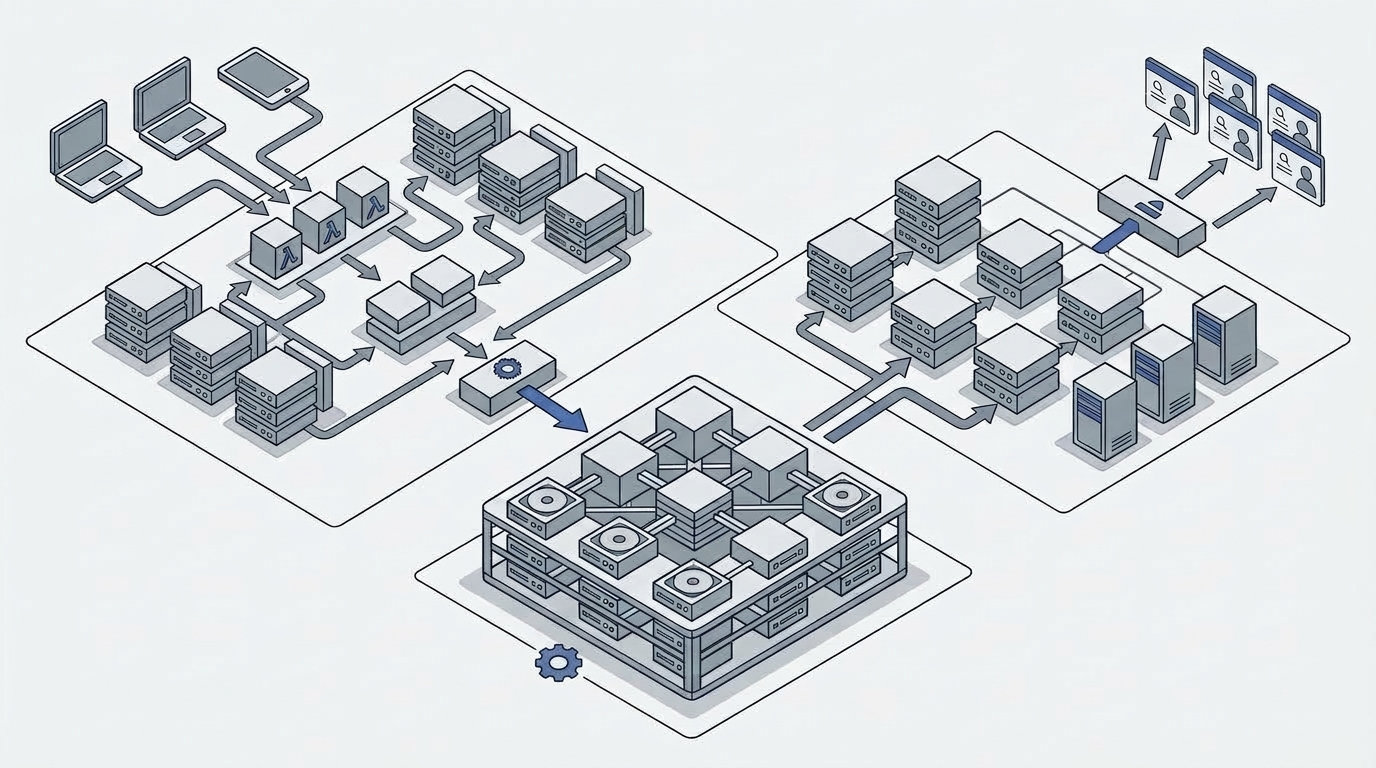
Infrastructure leaders evaluating serverless search must balance convenience against network boundaries and governance controls. Elastic addresses enterprise integration through native hooks documented in the Azure Native ISV Service documentation.
Chief among these integrations is network isolation. Through Azure Private Link support, organizations establish private endpoints within their Azure Virtual Networks (VNets). Traffic routed between internal Azure workloads and Elastic projects traverses Microsoft’s global private network backbone, preventing data from traversing the public internet. Identity governance is managed via native Microsoft Entra ID integration, which enforces single sign-on and organizational access policies across provisioned workspaces, as outlined in Elastic’s native integration guide.
From a procurement perspective, deploying through Microsoft Azure Marketplace consolidates licensing costs directly onto the customer’s primary Azure invoice. All eligible expenditures count toward existing Microsoft Azure Consumption Commitments (MACC). Additionally, organizations can configure automated ingestion of Azure subscription activity logs and connect projects directly to Azure OpenAI endpoints to support generative retrieval workflows.
What happens next
With the Central US region online, enterprise platform teams should assess their existing search, observability, and AI retrieval architectures against regional availability and data residency requirements. Prospective teams can initiate seven-day trials through the Azure Marketplace or the Elastic Cloud console to validate throughput and latency metrics for representative workloads.
Infrastructure architects should review the Elastic Cloud Serverless documentation to evaluate the trade-offs of decoupled architectures. While serverless simplifies capacity management and isolates ingest spikes, organizations with highly static, round-the-clock baselines must compare consumption-based pricing models against reserved-instance commitments to determine long-term operational efficiency.
Sources
- Elastic Cloud Serverless expands to corn heartland – Iowa of all places! 👏 | Elastic Blog
- Elastic Cloud Serverless | Elastic Docs
- Elastic Announces General Availability of Elastic Cloud Serverless on Microsoft Azure | APMdigest
- Azure Private Link for Elastic Cloud Serverless is now generally available | Elastic Blog
- Elastic integrations overview – Azure Native Integrations | Microsoft Learn
- Azure native integration for Elastic Cloud Serverless | Elastic Blog
- Create Elastic application – Azure Native Integrations | Microsoft Learn