
Key takeaways
- Over 200 economists and tech leaders demand immediate guardrails for AI.
- The 88-word Stanford manifesto warns of unprecedented global labor displacement.
- 16 Nobel laureates joined Google and OpenAI executives in signing.
- Experts predict AI will drastically outpace the Industrial Revolution’s economic shifts.
- Immediate institutional action is required to prevent extreme wealth consolidation.
On July 13, 2026, the global technology sector and macroeconomic landscape received a stark wake-up call regarding the impending AI economic impact. Over 200 leading economists and top-tier technology executives released a definitive, 88-word open letter titled “We Must Act Now: A Statement on AI’s Transformation of the Economy.” Organized by the Stanford University Digital Economy Lab under the direction of economists Erik Brynjolfsson, Ajay Agrawal, Anton Korinek, and Tom Cunningham, this highly concise document serves as a severe warning. The signatories unambiguously state that artificial intelligence systems could become radically more powerful over the next decade, demanding that policymakers and institutions prepare immediately for an unprecedented period of rapid economic shift.
The coalition of signatories is exceptionally broad, aiming to bridge the historical gap between academia and the commercial AI industry regarding society-altering technologies. It features 16 Nobel laureates, including legendary economists Paul Krugman, Simon Johnson of MIT, and Joseph Stiglitz of Columbia University. Joining them are highly influential tech executives who are actively building these models: former Google CEO Eric Schmidt, LinkedIn co-founder Reid Hoffman, OpenAI CFO Sarah Friar, Anthropic co-founder Jack Clark, and Google DeepMind Chief Scientist Jeff Dean. This alignment of AI & Machine Learning pioneers and macroeconomic theorists signals that the transformation is no longer a theoretical projection, but a concrete engineering reality requiring immediate oversight.
The Architectural Reality of the AI Economic Impact
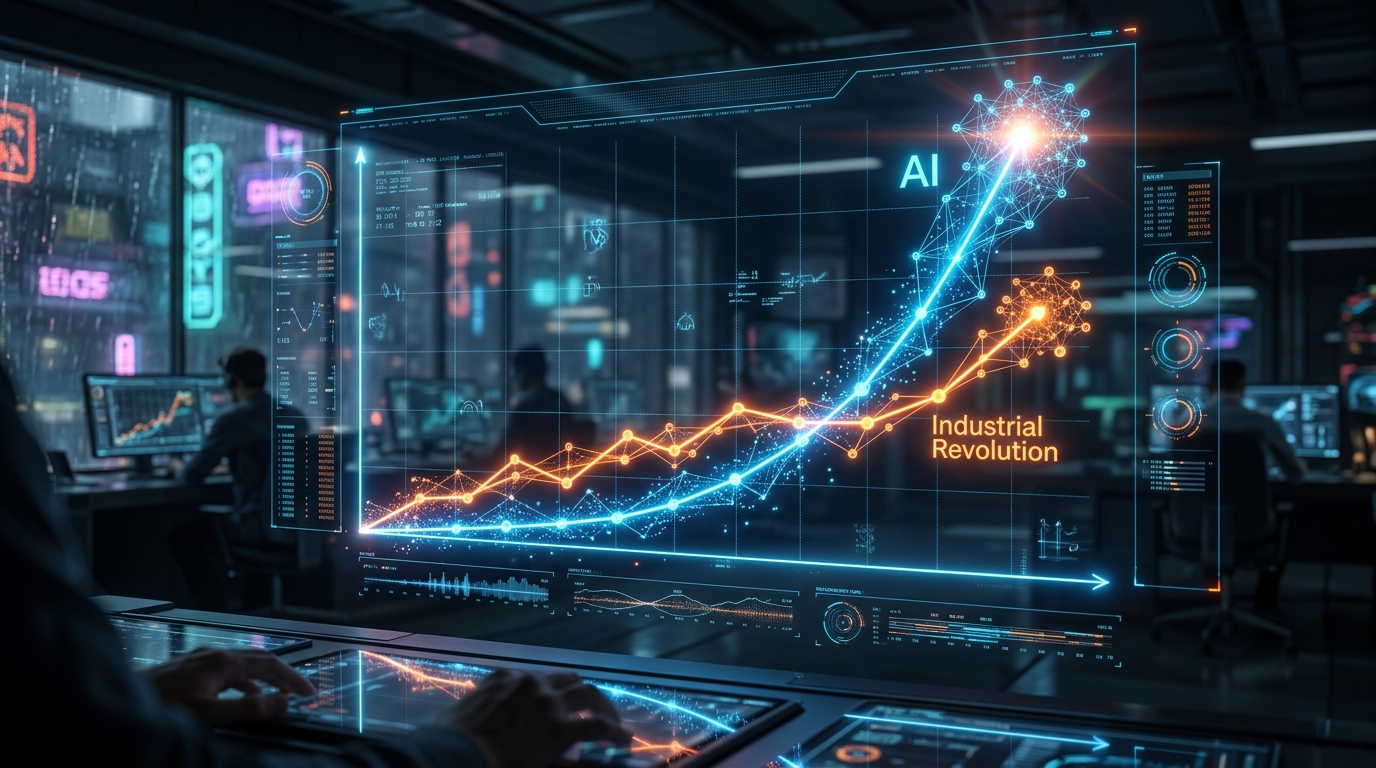
To understand why such a diverse array of experts is sounding the alarm, one must look at the underlying mechanics of modern computational models. Over the past several years, the scaling laws governing large language models (LLMs) and agentic frameworks have held true with ruthless efficiency. As compute clusters grow exponentially larger and synthetic data pipelines refine training paradigms, the cognitive capabilities of these systems are increasing at a staggering rate. We are moving beyond mere autocomplete algorithms into the realm of autonomous agents capable of multi-step reasoning, complex code generation, and sophisticated data analysis that rivals human specialists.
The economists’ statement draws a direct parallel to history, noting that the economic transformation driven by AI could ultimately be larger than the Industrial Revolution. However, the critical differentiator is velocity. While the transition from agrarian to industrial societies played out over multiple generations, allowing labor markets, educational systems, and social safety nets time to adapt, the current transformation will unfold over a vastly shorter time frame. Today’s deep learning architectures can be deployed globally in a matter of weeks through centralized cloud infrastructure, instantly upgrading the cognitive capabilities of millions of endpoints simultaneously.
For Enterprise IT leaders, this architectural reality presents a dual-edged sword. On one hand, the integration of agentic AI promises massive gains in productivity and a dramatic reduction in the Total Cost of Ownership (TCO) for software development and administrative operations. On the other hand, it introduces immense systemic risks. When an enterprise replaces vast swaths of its human cognitive labor with automated agents, the speed of business accelerates, but the margin for error in deployment, governance, and alignment becomes virtually zero. The underlying synthetic workforce acts as a new cognitive electrical grid—powerful, omnipresent, and highly disruptive to existing operational hierarchies.
Market Impact & Workforce Displacement
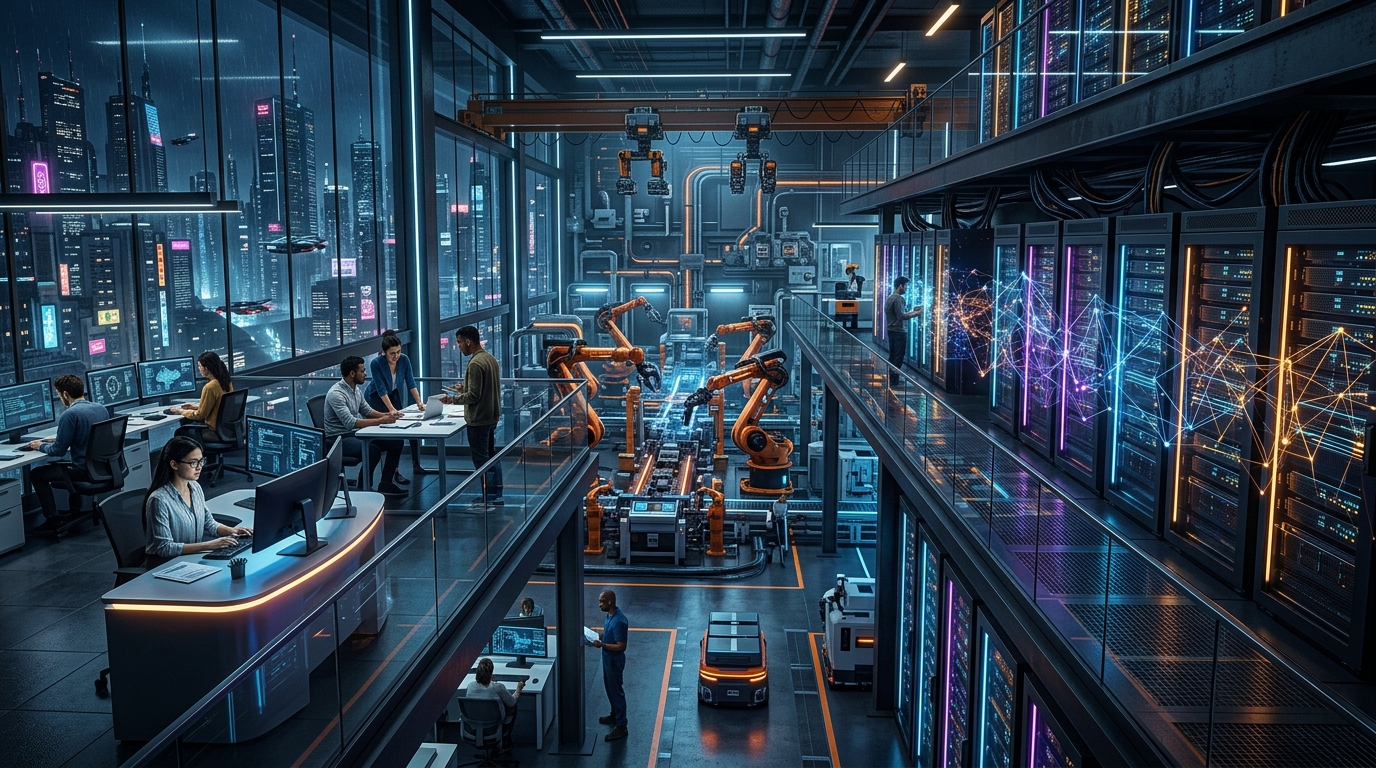
The core of the Stanford University Digital Economy Lab’s initiative is addressing the severe market implications of this technological leap. The open letter explicitly acknowledges risks like large-scale job displacement alongside the opportunities for immense productivity improvements and major gains in living standards. Unlike previous technological revolutions that primarily automated physical or highly repetitive mechanical tasks, the current wave of generative artificial intelligence directly targets cognitive, analytical, and administrative labor—the historical strongholds of the middle class economy.
We are already seeing the precursors to this massive structural shift across various sectors. Financial services firms are utilizing AI to automate complex quantitative analysis, risk assessment, and compliance audits. Legal firms are deploying specialized models for discovery, precedent research, and contract review, drastically reducing the billable hours required for junior associates and paralegals. In software engineering, sophisticated AI copilots are executing routine coding tasks and architectural scaffolding, fundamentally altering the required team sizes for major product shipping. When 16 Nobel laureates and figures like Paul Krugman and Joseph Stiglitz warn of economic displacement, they are pointing to a structural hollowing out of traditional white-collar employment that could destabilize consumer purchasing power.
The call to action in the 88-word statement is exceptionally clear: society must build the incentives, guardrails, and institutions needed to steer AI in a direction that complements humans rather than simply replacing them. Leaving these outcomes purely to unregulated market forces risks consolidating immense wealth and productivity gains into the hands of a few hyperscalers, leaving the broader workforce behind. Market impact, therefore, is not just about measuring raw GDP growth; it is about evaluating wealth distribution, labor participation rates, and the fundamental stability of consumer markets in an era where human cognitive labor is drastically devalued by synthetic alternatives.
Bridging Academia and the Tech Industry
One of the most fascinating aspects of the “We Must Act Now” statement is the unprecedented collaboration between theoretical economists and the engineers actively building the technology. Typically, the tech industry operates on a mandate of moving fast and breaking things, while academia focuses on long-term systemic analysis and historical precedent. The fact that OpenAI’s Sarah Friar, Anthropic’s Jack Clark, and Google DeepMind’s Jeff Dean have co-signed a document demanding institutional guardrails suggests a profound internal recognition of the technology’s explosive socioeconomic potential.
These executives understand that operating Networking & Cloud infrastructure at this scale carries immense societal responsibility. The data centers powering these AI models consume massive amounts of energy and capital, heavily centralized among a few key players. The resulting intelligence is a general-purpose technology that will permanently redefine global trade, national security, and intellectual property frameworks. By joining forces with eminent economists like Simon Johnson and Erik Brynjolfsson, the tech sector is essentially asking for regulatory frameworks to help manage a transition that is far too massive for any single corporation—or even an oligopoly of corporations—to handle responsibly.
The letter explicitly calls for intentional, collective, democratic choices. This is a profound admission that the trajectory of artificial intelligence cannot be treated merely as a product roadmap or a software update cycle. It must be treated as a defining macroeconomic policy issue of the 21st century. The challenge for global policymakers will be designing sophisticated guardrails that prevent catastrophic labor collapse without stifling the genuine innovation that could solve critical global challenges in healthcare, climate science, and resource optimization.
The Consumer Translation
For the everyday consumer and worker, this highly technical and macroeconomic debate translates into immediate, tangible anxiety and unprecedented opportunity. The average person may not understand the intricacies of transformer models, neural network weights, or token optimization, but they acutely feel the shifting ground in their workplaces. The statement from these 200+ experts validates the public’s intuition: the economy is changing faster than ever before, and the traditional rules of career progression are being rewritten in real-time.
On a practical level, this means that continuous learning and radical adaptability are no longer just corporate buzzwords; they are absolute survival mechanisms. As AI takes over routine cognitive tasks, human workers will need to urgently pivot toward roles that require complex problem-solving, deep emotional intelligence, physical dexterity, and strategic oversight of automated systems. The transition period will likely be highly turbulent. Consumers will undoubtedly benefit from lower costs for digital services, faster medical diagnostics, and hyper-personalized digital experiences, but these benefits will be constantly weighed against the intense stress of job insecurity and wage stagnation in increasingly vulnerable sectors.
Ultimately, the “We Must Act Now” letter is a unified call for a new social contract. Just as the Industrial Revolution necessitated the creation of labor laws, public education systems, and robust social safety nets, the AI revolution will require a total reimagining of how society distributes the gains of automation. Whether that takes the form of universal basic income, significantly reduced workweeks, or massive government-funded retraining programs, the consensus among the world’s top economic minds is that the time for passive observation has permanently passed.
Frequently Asked Questions
Q1: What is the “We Must Act Now” AI statement?
It is a concise, 88-word open letter released on July 13, 2026, by over 200 economists and tech leaders. It warns that AI systems could become radically more powerful over the next decade and calls for immediate policy guardrails.
Q2: Who signed the AI economic impact letter?
Notable signatories include 16 Nobel laureates like Paul Krugman and Joseph Stiglitz. Tech leaders like former Google CEO Eric Schmidt, OpenAI CFO Sarah Friar, and Anthropic co-founder Jack Clark also signed.
Q3: How does AI compare to the Industrial Revolution?
Economists predict the AI-driven economic transformation could be larger than the Industrial Revolution. Furthermore, this shift is expected to unfold over a vastly shorter time frame, severely limiting the time society has to adapt.
Q4: Who organized this initiative?
The initiative was organized under the Stanford University Digital Economy Lab by economists including Erik Brynjolfsson, Ajay Agrawal, Anton Korinek, and Tom Cunningham.
Q5: What are the main risks mentioned in the letter?
The letter acknowledges severe risks like large-scale job displacement, warning that without proper incentives, guardrails, and institutions, the rapid integration of AI could leave a massive portion of the workforce behind.
TechNode HQ Verdict: Pros, Cons & Usability
- Pro (Engineering): Radically improved capabilities in AI models promise massive gains in computational productivity, enabling software to tackle highly complex, multi-step cognitive reasoning tasks at an unprecedented scale.
- Pro (Consumer): Potential for major improvements in living standards, including faster medical breakthroughs, reduced costs for digital services, and highly personalized automation of daily tasks.
- Con: A massive risk of widespread, rapid job displacement in white-collar and cognitive labor sectors, occurring exponentially faster than the labor market can naturally adapt.
- Con: The deployment of necessary guardrails and institutional protections is lagging far behind the exponential growth of AI capabilities, risking severe economic destabilization and wealth inequality.
Enterprise Usability: CTOs and enterprise leaders must aggressively audit their software supply chains and labor dependencies today. The transition to agentic AI workflows is inevitable; executives should focus on retaining existing talent to manage and oversee AI systems while preparing for significant shifts in operational cost structures.
Everyday Usability: The general public should view this technology as both a powerful personal tool and a systemic disruptor. Individuals must proactively upskill in areas requiring complex human judgment, emotional intelligence, and strategic oversight, preparing for a highly volatile job market over the next decade.